
Averstar Chemical Editorial Team Updated November 7, 2026
Tembotrione and Topramezone: HPPD Corn Herbicide Buyer Guide
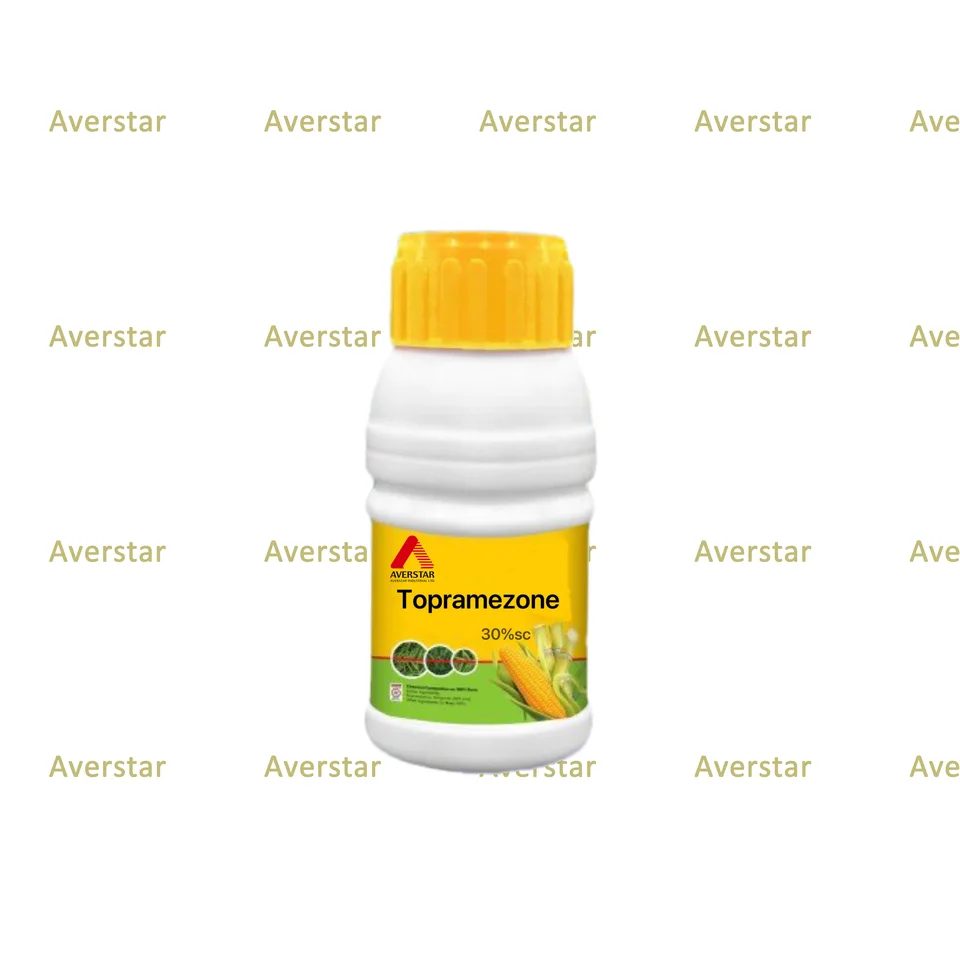
Tembotrione and topramezone are post-emergence corn herbicides that control broadleaved weeds and a range of grasses. Both inhibit the same plant enzyme, HPPD, which gives treated weeds their typical white, bleached appearance. They are often compared with mesotrione, the best-known member of the group, and buyers need to match the active, formulation and label to the weeds and corn type in the destination market.
Averstar's catalogue lists tembotrione 8% OD, tembotrione 97% technical material and a topramezone SC offered at 30%, 4% and 10%. Our mesotrione guide covers the third HPPD active and its atrazine mixtures. The approved destination-market label always decides the permitted crops, weeds, dose, timing, adjuvants and restrictions for the product actually supplied.
Quick answer: Use tembotrione or topramezone after crop and weed emergence in corn, as the label describes, against broadleaved weeds and the grasses it lists. Both are HRAC Group 27, like mesotrione, so switching between them is not a rotation. Check the corn types, adjuvant requirements and rotational crop restrictions on the label.
How HPPD herbicides work
HPPD (4-hydroxyphenylpyruvate dioxygenase) is an enzyme that plants need to make the pigments that protect chlorophyll from light. When it is blocked, new leaves of susceptible weeds turn white and the plants die over the following days. The HRAC classification lookup places tembotrione and mesotrione (triketones) and topramezone (a pyrazole) in Group 27, formerly coded F2.
How tembotrione and topramezone differ
University of Hertfordshire Pesticide Properties Database (PPDB) records describe the actives as follows:
- Tembotrione: a post-emergence herbicide for a broad spectrum of broadleaved and grass weeds in maize and sweetcorn, with examples including barnyardgrass, crabgrass, foxtails, goosegrass and nutsedge. It is often formulated as an oil dispersion or suspension concentrate. Some tembotrione products include a crop safener, so confirm the full composition declared on the registered label.
- Topramezone: a systemic, highly selective post-emergence herbicide that is rapidly absorbed and translocated, used mainly in field corn, sweetcorn and popcorn against broadleaved weeds and grasses such as giant foxtail, crabgrass, goosegrass, barnyardgrass and johnsongrass.
The weed lists differ between products and markets, so compare the weeds named on each registered label rather than the general spectrum.
Crop safety, adjuvants and resistance
Corn types and hybrids can differ in tolerance, so use these products only in the corn types and growth stages their labels list. Post-emergence labels often specify which adjuvant to add, and they set intervals before sensitive rotational crops can be planted; include both in distributor training and translated label artwork.
HPPD inhibitors are frequently combined with herbicides from other groups, such as photosystem II inhibitors like atrazine, to broaden the weed spectrum. Resistance to Group 27 has been reported in some weed populations, so plan rotations and mixtures with other HRAC groups rather than relying on one HPPD active. Our sulfonylurea guide covers ALS inhibitors, a different group.
Compare the catalogue formulations
- Tembotrione 8% OD: an oil dispersion, in which the active is suspended in an oil. OD products are checked for separation and re-dispersion after storage.
- Topramezone SC: a suspension concentrate offered at 30%, 4% and 10%. Each strength is a separate registered product with its own dose, so the quotation, certificate and label must name the same one.
- Tembotrione 97% TC: technical material for formulators who hold a licence or registration, not an end-use product.
Penn State Extension's overview of pesticide formulations compares these types, and FAO/WHO pesticide specifications describe the properties buyers test.
A product selection checklist
- The corn type and growth stage, and whether the label covers them.
- The target weeds by species, matched to the weeds named on the label.
- Adjuvant requirements and tank-mix partners allowed by the label.
- Rotational crop intervals for the crops that follow corn.
- The herbicide groups already used, so Group 27 fits a resistance plan.
- Concentration and unit matched on quotation, certificate of analysis and label.
- Packaging, safety data sheet and translated label artwork.
Build the inquiry around the intended use
Send the corn type, the target weeds, the herbicides already used, the preferred product and concentration, the packaging and the destination market through our contact form. For a first order, a pesticide sample evaluation plan helps compare samples against the agreed specification before scaling up.
Frequently asked questions
Is tembotrione the same as mesotrione?
No, but they are closely related. Both are triketone HPPD inhibitors in HRAC Group 27 and both are used in corn, but they are different actives with their own labels, weed lists and doses. Switching between them does not rotate modes of action.
Why do weeds turn white after spraying?
HPPD inhibitors stop the plant making pigments that protect chlorophyll, so new growth bleaches white before the weed dies. The bleaching shows the product is working, as described on the label.
Can topramezone be used in sweetcorn or popcorn?
Only where the registered label in the destination market lists them. The PPDB gives field corn, sweetcorn and popcorn as example uses, but labels differ between markets and products.
Authoritative references
- Global Herbicide Classification Lookup - Herbicide Resistance Action Committee
- PPDB: Tembotrione - University of Hertfordshire PPDB
- PPDB: Topramezone - University of Hertfordshire PPDB
- Pesticide Formulations - Penn State Extension
- Pesticide Specifications and Quality Control (FAO/WHO JMPS) - FAO