
Averstar Chemical Editorial Team Updated October 29, 2026
Pesticide Sample Evaluation: Plan Before You Test
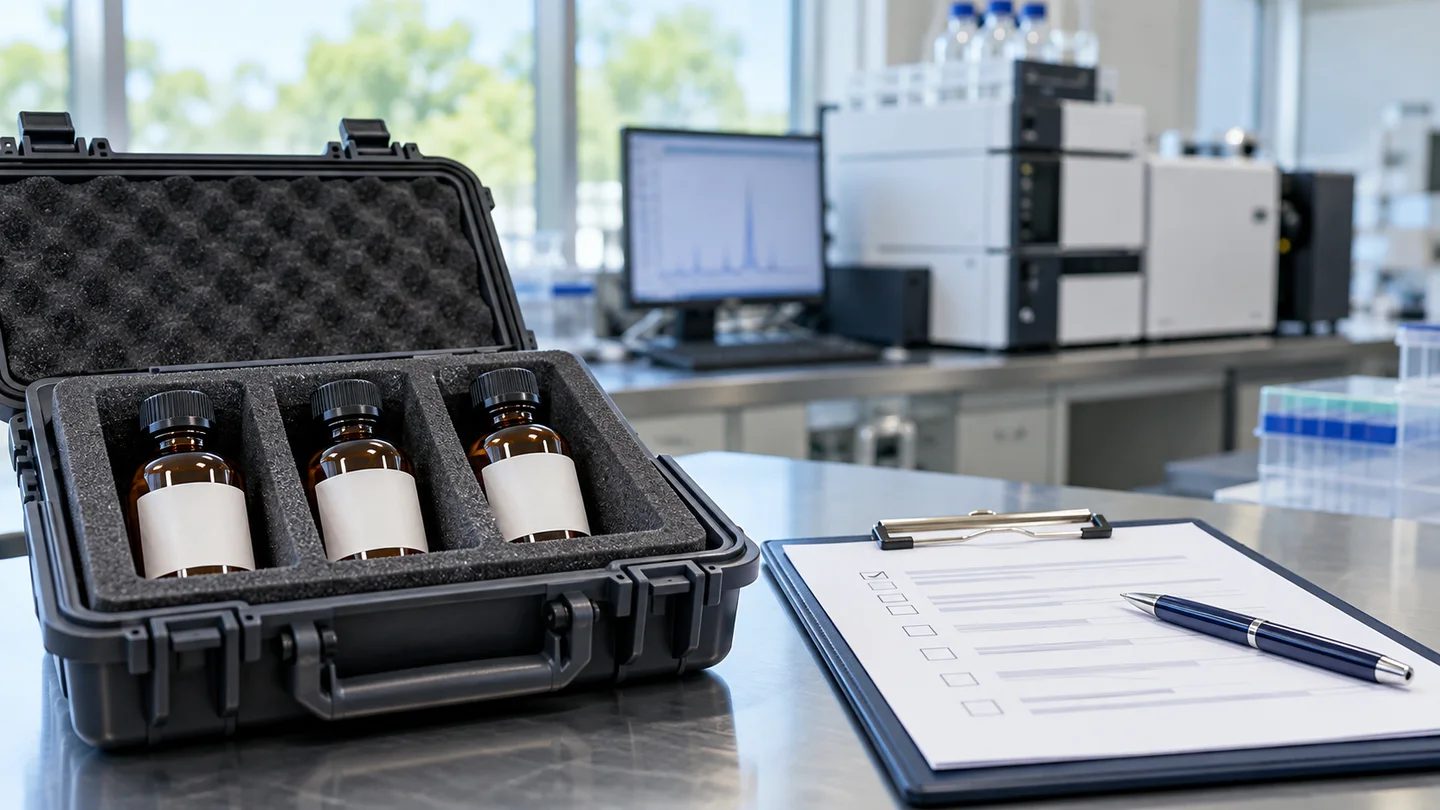
A pesticide sample evaluation should begin with a decision, not a courier booking. Are you comparing potential suppliers, checking a proposed formulation, or assessing an identified production batch? Define that purpose first. Then agree the sample identity, relevant tests, acceptance criteria, laboratory responsibilities and limits of the conclusion before material is dispatched.
For agrochemical importers and distributors, the practical value of a sample is the evidence it can provide for a specific purchasing decision. A report with several passing results is difficult to use if nobody recorded what was sampled or what those results were intended to establish. This guide sets out a suggested buyer workflow for planning that review.
Quick answer: Write the evaluation objective, identify the material, agree the test scope and decision criteria, confirm laboratory arrangements, and record the conclusion with its limitations. Keep a development sample review separate from approval of a later commercial batch.
Define the purchasing decision
Write a short statement of purpose that purchasing and the technical reviewer both understand. “Compare the proposed formulation with our agreed specification” is more useful than “check quality.” It identifies a comparison that can be planned. If the buyer instead wants to investigate a complaint, the questions and evidence needed may be different.
List what the review will not settle. A laboratory assessment of the submitted material does not, by itself, answer every question about market authorization, field performance, final packaging or future production. Give each separate question an owner rather than asking one test report to support the entire sourcing decision.
For a new supplier discussion, begin with the pesticide RFQ template. Use the same product description in the quotation request and sample brief so the commercial and technical conversations concern the same proposed configuration.
Identify what the sample represents
Ask the supplier to identify whether the material comes from laboratory development, pilot manufacture or an identified production batch. Record the formulation code, declared concentration, sample identifier, available batch information and date supplied. Where the source is uncertain, record that uncertainty instead of describing the sample as representative of commercial stock.
For batch acceptance work, a qualified sampling plan matters. The sampling appendix in the FAO/WHO specifications manual explains the need for representative material and for samples to arrive intact. It also distinguishes this work from process quality control during manufacture. Use qualified personnel to define the actual sampling procedure.
As a buyer, request a traceable handover record rather than improvising collection instructions. Ask who collected the sample, which material it came from, how it was identified and what condition the receiving laboratory recorded. These questions help connect a result to its source without making the procurement team responsible for performing laboratory work.
Agree the test scope before dispatch
Ask the technical reviewer to identify the applicable specification and the tests needed for the stated purpose. Request the method reference, reporting unit and acceptance criterion for each selected parameter. Where a criterion is not yet agreed, mark it as an open decision before requesting a pass-or-fail conclusion.
FAO describes pesticide specifications as quality references that can support contracts and trade. A purchasing brief should identify the relevant specification and confirm its applicability, rather than using a general phrase such as “international standard” without a reference. Your technical reviewer can then explain any additional product-specific requirements.
The laboratory should confirm the quantity and packaging it needs, expected turnaround, reporting format and arrangements for unused material. Have the responsible logistics team confirm how the sample can be shipped to the destination. Do not assume that a small quantity removes product-specific handling or transport requirements.
The World Health Organization's guidance for pesticide quality-control laboratories addresses laboratory organization, personnel, procedures and facilities as well as testing. This provides useful background for asking how a laboratory will manage the assignment. It does not establish the competence of a particular provider without checking that provider's relevant capabilities.
Pesticide sample evaluation brief
Use this proposed template to organize the request. It is a purchasing worksheet, not an official sampling protocol or a universal registration requirement.
- Objective: Information to agree: The purchasing question and decision the review supports.
- Material identity: Information to agree: Ingredient, concentration, formulation, sample ID and source.
- Represented material: Information to agree: Development sample, pilot material or identified production batch.
- Sampling record: Information to agree: Responsible person, collection record and traceability information.
- Test scope: Information to agree: Selected parameters, methods, units and specification revision.
- Decision criteria: Information to agree: Agreed limits and the reviewer responsible for interpretation.
- Laboratory arrangements: Information to agree: Required quantity, receipt conditions, timing and report format.
- Completion: Information to agree: Open items, decision owner and permitted next step.
Send the brief to the supplier and laboratory before shipment. Resolve conflicting descriptions while the material is still at its source. When the laboratory receives it, reconcile its sample identifier with the buyer's record so the eventual report can be filed against the correct request.
Turn results into a bounded decision
Read the report against the original brief. Check that the requested parameters were addressed and that the product and sample identifiers match. If a result is missing, the method differs or the reporting unit changed, ask for an explanation before treating the assignment as complete. The COA review checklist offers a related document-review workflow.
A useful conclusion names the material and the next step. For example: “Submitted development sample S-01 met the agreed screening criteria; request confirmation of the commercial manufacturing and packaging configuration before proceeding.” This is a hypothetical wording example. It deliberately avoids stating that all future batches have been approved.
Record unresolved items alongside the results. If later production uses a different configuration, refer the change back to the technical reviewer instead of assuming that the original sample decision still applies. Keep the report, brief and correspondence together so another team member can understand both the evidence and its limits.
Prepare a useful sample request
A pesticide sample evaluation plan should leave the buyer with a clear decision and a traceable evidence file. Before requesting material, agree what will be evaluated, who will interpret the results and what approval allows the project to do next.
Contact Averstar with the proposed ingredient, concentration, formulation, destination market and evaluation objective. Include your laboratory's requirements when available so sample availability, documentation and dispatch arrangements can be discussed together.
Frequently asked questions
Can one sample approve every future shipment?
The conclusion should be limited to the material and scope actually evaluated. A development sample may support the next sourcing step, while a production-batch review addresses identified stock under an agreed sampling plan. Establish future batch verification separately rather than treating an initial result as permanent approval of the supplier's output.
How much sample should an importer request?
Ask the receiving laboratory to specify the quantity needed for the agreed tests, any repeat work and retention arrangements. Confirm packaging and transport with the responsible parties before dispatch. There is no single volume or mass in this buyer checklist that is appropriate for every pesticide formulation and evaluation purpose.
What if two laboratories report different results?
First reconcile sample identity, collection history, methods, units and reporting conditions with the technical reviewer. Ask the laboratories to explain the difference before choosing the more convenient result. If further work is needed, agree its purpose and procedure rather than requesting repeated testing without a defined question.
Authoritative references
- FAO/WHO specifications manual - Food and Agriculture Organization of the United Nations
- pesticide specifications - Food and Agriculture Organization of the United Nations
- guidance for pesticide quality-control laboratories - World Health Organization