
Averstar Chemical Editorial Team Updated November 7, 2026
Bentazone, Fluoroglycofen-ethyl, Sulfentrazone and 2,4-D: Broadleaf Weed Herbicide Guide
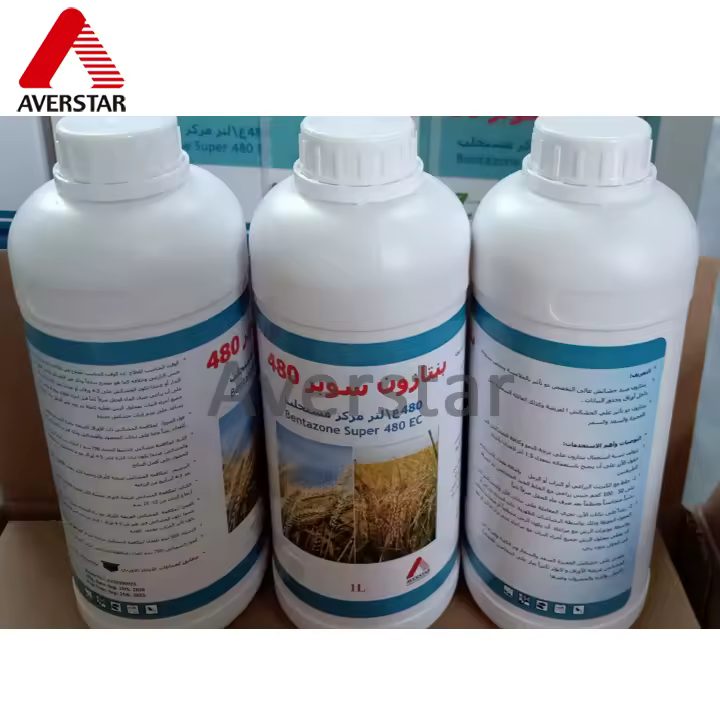
Broadleaf weeds escape many grass herbicides, so growers rely on products from several groups to control them. Bentazone, fluoroglycofen-ethyl, sulfentrazone and 2,4-D each work in a different way, and they differ in crop safety, timing and whether they act by contact or move through the plant. Matching them to the crop and weeds on the label is what makes them effective.
Averstar's catalogue lists bentazone 480 g/L SL, fluoroglycofen-ethyl 10% EC, sulfentrazone 95% technical material and 2,4-D 720 g/L SL. This guide explains how the actives differ and which documents to request. The approved destination-market label always decides the permitted crops, weeds, dose, timing and restrictions for the product actually supplied.
Quick answer: Use bentazone as a post-emergence contact herbicide in soybeans, rice, corn and other tolerant crops; fluoroglycofen-ethyl for fast post-emergence burn of annual weeds in its labelled crops; sulfentrazone mainly before weed emergence in crops such as soybeans and sugarcane; and 2,4-D in cereals, pasture and non-crop sites. They sit in HRAC Groups 6, 14, 14 and 4.
Bentazone, a contact photosynthesis inhibitor
The University of Hertfordshire Pesticide Properties Database (PPDB) describes bentazone as a selective post-emergence contact herbicide against annual weeds such as nightshade, fat hen, wild radish, shepherd's purse and black bindweed. Example crops include soybeans, rice, corn, sorghum, peanuts, beans, peas and alfalfa. It is absorbed by foliage with very little translocation, so good coverage of small weeds matters. It inhibits photosystem II, but the HRAC classification lookup places it in Group 6, separate from the triazines in Group 5.
Fluoroglycofen-ethyl and sulfentrazone
Both actives inhibit protoporphyrinogen oxidase (PPO), HRAC Group 14. Blocking the enzyme causes compounds that destroy cell membranes in light to accumulate, so treated tissue browns quickly.
- Fluoroglycofen-ethyl: a nitrophenyl ether post-emergence herbicide against mainly annual weeds, with example uses in wheat, barley, oats, rice, peanuts and soybeans.
- Sulfentrazone: a herbicide against broadleaved weeds such as pigweed, waterhemp, lambsquarters, morning glory and carpetweed, and some grasses, absorbed by roots and foliage. Example uses include soybeans, chickpeas, tobacco, sugarcane and non-agricultural areas. Its labels generally apply it to the soil before weeds emerge. The sulfentrazone 95% TC is technical material for formulators, not an end-use product.
2,4-D, a synthetic auxin
The PPDB describes 2,4-D as a selective, translocated phenoxy herbicide that acts as a synthetic auxin, HRAC Group 4, with example uses in cereals, pastures and turf, orchards, lucerne and non-crop areas. Our 2,4-D guide explains the amine and ester forms and how strength is stated as salt or acid equivalent, which matters when comparing the 2,4-D 720 g/L SL with other offers.
Rotation, drift and registration
Because the four actives sit in different HRAC groups, they can be combined or rotated with each other and with grass herbicides to slow resistance, as labels allow. Resistance to PPO and synthetic auxin herbicides has been reported in some weed populations, so avoid relying on a single group.
2,4-D can damage sensitive crops such as cotton, grapes, tomatoes and other broadleaved crops through spray drift or, for some forms, vapour. Labels set nozzle, wind and buffer requirements; include them in distributor training and translated label artwork.
The PPDB records bentazone and 2,4-D as approved in the European Union, and fluoroglycofen-ethyl and sulfentrazone as not approved there. Other markets differ, so confirm the current status and residue limits for each destination and importing market.
Compare the catalogue formulations
- Bentazone 480 g/L SL and the 2,4-D 720 g/L SL: soluble concentrates; confirm whether strength is stated as the salt or as acid equivalent.
- Fluoroglycofen-ethyl 10% EC: an emulsifiable concentrate that needs solvent-compatible packaging.
- Sulfentrazone 95% TC: technical material traded with its own purity specification.
Penn State Extension's overview of pesticide formulations compares these types, and FAO/WHO pesticide specifications describe the properties buyers test.
A product selection checklist
- The crop and its tolerance to each active on the label.
- Target broadleaved weeds by species and growth stage.
- Timing: post-emergence contact, post-emergence translocated or pre-emergence soil use.
- The herbicide groups already used, so the programme rotates modes of action.
- Sensitive crops nearby and the drift precautions on the label.
- Strength stated on the same basis on quotation, certificate of analysis and label.
- Packaging, safety data sheet and translated label artwork.
Build the inquiry around the intended use
Send the crop, the target weeds and stage, the herbicides already used, the preferred product and concentration, the packaging and the destination market through our contact form. For a first order, a pesticide sample evaluation plan helps compare samples against the agreed specification before scaling up.
Frequently asked questions
Is bentazone in the same group as atrazine?
No. Both inhibit photosystem II, but they bind differently, so HRAC places bentazone in Group 6 and atrazine in Group 5. They can complement each other where labels allow.
Why do weeds burn so quickly after fluoroglycofen-ethyl?
PPO inhibitors cause membrane-destroying compounds to build up in light, so treated leaves brown within a short time. Contact action means coverage of small weeds decides results.
Can 2,4-D be sprayed near cotton or grapes?
Only with the precautions on the label, and often not at all near sensitive crops. 2,4-D can injure broadleaved crops through drift, so labels set wind, nozzle and buffer requirements.
Authoritative references
- PPDB: Bentazone - University of Hertfordshire PPDB
- Global Herbicide Classification Lookup - Herbicide Resistance Action Committee
- PPDB: Fluoroglycofen-ethyl - University of Hertfordshire PPDB
- PPDB: Sulfentrazone - University of Hertfordshire PPDB
- PPDB: 2,4-D - University of Hertfordshire PPDB
- Pesticide Formulations - Penn State Extension
- Pesticide Specifications and Quality Control (FAO/WHO JMPS) - FAO