
Averstar Chemical Editorial Team Updated November 17, 2026
Cyhalofop-Butyl + Penoxsulam OD for Rice Weed Control
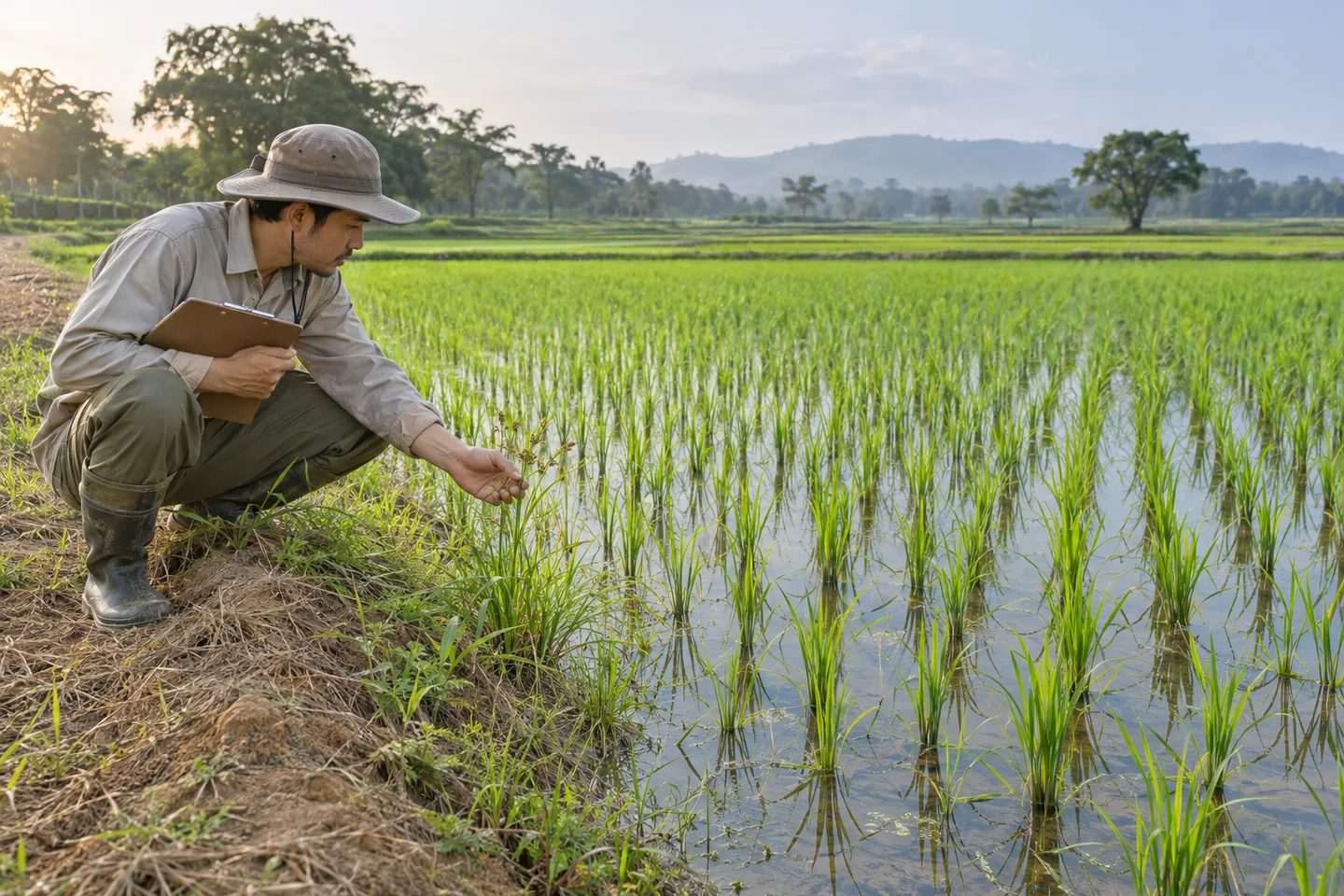
Cyhalofop-butyl + penoxsulam OD combines two herbicides that buyers may consider when a rice field contains several weed types. Choosing the product starts with identifying those weeds and checking the approved crop-use pattern. A useful inquiry names the grass, sedge and broadleaf weeds, their growth stages, the rice establishment method and the destination country.
Quick answer. Cyhalofop-butyl provides a grass-weed component, while penoxsulam can contribute activity against selected grasses, sedges and broadleaf weeds. Match the proposed formulation to the actual weed spectrum and locally approved label, then compare its concentration, quality specification and packaging. Averstar lists a 35% cyhalofop-butyl + 5% penoxsulam OD configuration. Averstar product listing
Understand the role of each ingredient
The University of Hertfordshire's Pesticide Properties DataBase describes cyhalofop-butyl as a selective post-emergence grass herbicide used in rice. Corteva's information for a penoxsulam product describes activity against specified rice grasses, sedges and broadleaf weeds. These roles explain why the combination is worth evaluating for mixed weed populations. The proposed product's approved weed list establishes its actual scope. Cyhalofop-butyl technical profile · Corteva penoxsulam product information
The Herbicide Resistance Action Committee places cyhalofop-butyl in Group 1, the acetyl-CoA carboxylase inhibitors, and penoxsulam in Group 2, the acetolactate synthase inhibitors. These are different modes of action. Record both on the distributor's technical sheet and use the current classification when reviewing a seasonal portfolio. HRAC classification lookup
- Cyhalofop-butyl: Main selection question — Which grass species and growth stages does the proposed label cover?.
- Penoxsulam: Main selection question — Which additional grasses, sedges and broadleaf weeds are included?.
- The finished mixture: Main selection question — Do the approved uses and local performance evidence address the field's complete weed problem?.
Build a weed list before requesting a quotation
“Mixed rice weeds” leaves too much room for interpretation. A distributor should ask the local adviser for the principal species and a practical description of the infestation. Include photographs where identification needs confirmation. List weeds already present separately from later flushes that the programme may need to address.
For example, a field dominated by a grass species and a field dominated by sedges require different questions, even when both are described as a mixed infestation. Check which ingredient is expected to contribute against each target. If local experience reports poor control, collect the field history, product identity and application records before choosing a replacement.
Also state whether rice is direct-seeded or transplanted. Keep rice stage, weed stage and days after sowing or transplanting as distinct fields in the inquiry. A local crop adviser can then compare the situation with the exact label and determine whether the intended application window fits.
Match the label to water management and field conditions
A rice herbicide proposal should include the field's irrigation arrangement and the buyer's ability to manage water as required. Ask the technical team to check the label's water-management directions, crop-stage limits and restrictions for the proposed product. Record these conditions in the product brief used for distributor training.
Where a buyer has an established spray programme, include the other herbicides and any proposed spray additives. Have the relevant technical adviser check compatibility, crop safety and the permitted sequence. Product information for another penoxsulam or cyhalofop-butyl formulation can help identify questions to ask. The quotation and training material need the instructions for the specific formulation supplied.
Read 35% + 5% on the correct basis
Averstar's catalogue describes the combination as 35% cyhalofop-butyl and 5% penoxsulam in an OD formulation. Ask the supplier to confirm whether the percentages are expressed by mass and how they appear in the product specification. Keep the individual ingredient names beside their concentrations on the quotation and purchase order. Averstar product specification entry
If the specification confirms both values as percentages by mass, a calculated example is straightforward. One kilogram of formulation nominally contains 350 g cyhalofop-butyl and 50 g penoxsulam. Their declared mass ratio is 7 to 1. Converting those values to grams per litre requires the formulation density at the stated reference conditions.
Use these calculations to reconcile pack contents and quotations. For a volume-based order, obtain the matching density and concentration statement before calculating active ingredient quantities. A comparison with a different mixture ratio also requires the crop-use and registration review for that configuration.
Check the OD formulation as well as the assay
OD means oil dispersion. A formulation presentation hosted by the Collaborative International Pesticides Analytical Council describes an active ingredient suspended in oil and identifies storage stability as a formulation consideration. For purchasing, agree how the proposed product will be assessed before and after the relevant storage tests. CIPAC formulation presentation
Request the specification and batch certificate showing each active ingredient, its units, limits and analytical method. Ask which physical checks apply to the finished OD, including dispersion and storage behaviour. The sample, commercial formulation and proposed pack should have traceable identities so the evaluation can be tied to the eventual supply.
Prepare a complete rice-herbicide brief
Send the following information with a cyhalofop-butyl + penoxsulam OD inquiry.
- Market and crop — destination country, rice establishment method and crop stage.
- Weed targets — principal species, growth stages and recent control history.
- Field conditions — irrigation arrangement and the intended use window.
- Product identity — both concentrations, their declaration basis and the OD formulation code.
- Supply requirements — estimated volume, net pack size and the technical documents needed.
This gives the supplier and local technical team enough detail to evaluate the proposed configuration and prepare comparable offers. For a broader look at cyhalofop-butyl options, see the existing formulation guide. For a quotation, send the field brief and requested specification to Averstar. Cyhalofop-butyl formulation guide · Contact Averstar
Frequently asked questions
What does penoxsulam add to a cyhalofop-butyl product?
Penoxsulam can contribute activity against selected rice grasses, sedges and broadleaf weeds. The value of the combination depends on the identified weeds and the proposed product's approved uses. Ask which component contributes against each principal target, then review the mixture against the local field situation and label.
Does a two-ingredient mixture cover resistant rice weeds?
Evaluate resistance history for each important weed species. Different mode-of-action groups help describe the ingredients, but the local adviser still needs evidence that the proposed product will control the relevant population. Record earlier herbicides, field performance and the role of each ingredient when reviewing the programme.
How should a buyer compare 35% + 5% with a g/L quotation?
First confirm the percentage basis. For percentages by mass, obtain the formulation density and reference conditions before converting to grams per litre. Compare each ingredient separately, and reconcile the resulting values with the specification, net pack contents and quoted selling unit before approving the order.
Authoritative references
- Cyhalofop-butyl - University of Hertfordshire PPDB
- Assert - Corteva Agriscience
- Global Herbicide Classification Lookup - Herbicide Resistance Action Committee
- Formulation Choice: How and Why They Are Chosen - CIPAC / ECPA Specification Expert Group