
Averstar Chemical Editorial Team Updated November 7, 2026
Imazethapyr vs Imazamox: Imidazolinone Herbicide Buyer Guide
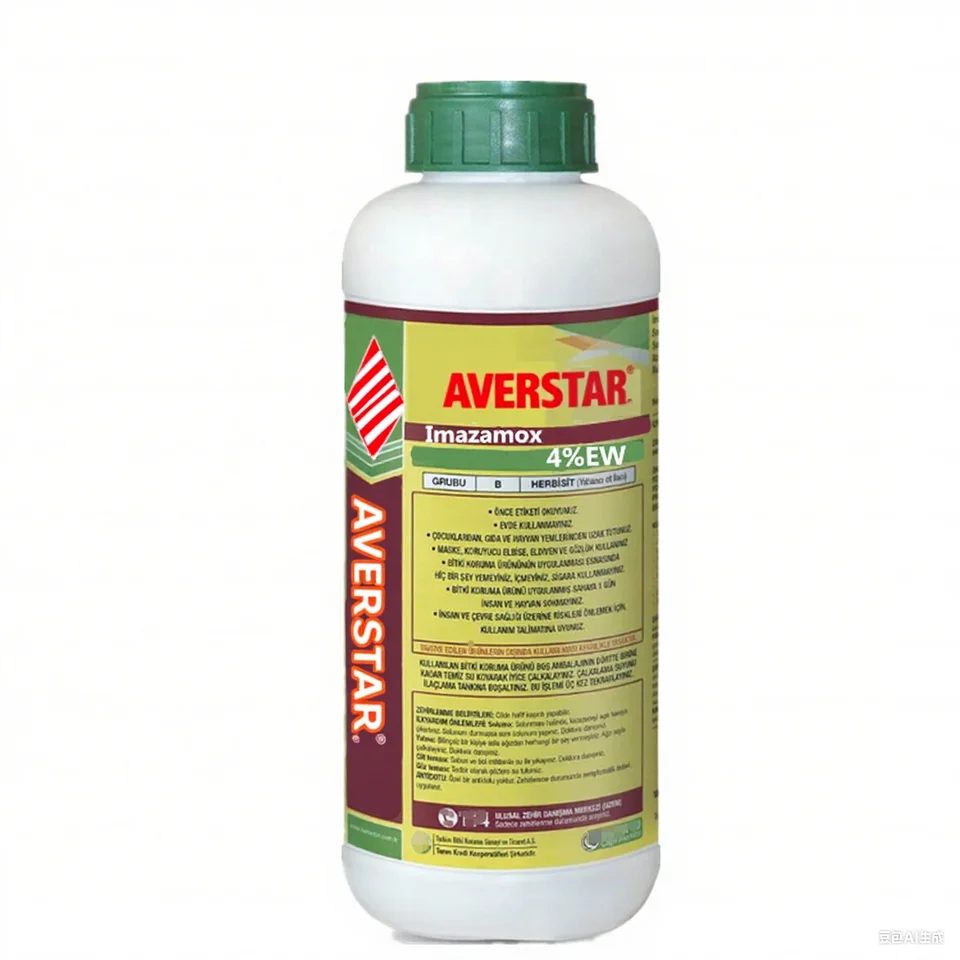
Imazethapyr and imazamox are imidazolinone herbicides, and they are often quoted together for soybeans, other legumes and herbicide-tolerant crop varieties. They share a mode of action and a long soil life, but they differ in the crops and weeds they are registered for, and one of the mixtures in this family contains a non-selective partner. Choosing between them starts with the crop variety and the next crop in the rotation.
Averstar's catalogue lists imazethapyr 100 g/L SL and 10% SL, imazamox 4% EW, and an imazamox and imazapyr mixture. This guide explains what the actives share, how they differ, why the mixture needs tolerant varieties and which documents to request. The approved destination-market label always decides the permitted crops, dose, timing and restrictions for the product actually supplied.
Quick answer: Match the product to the crop and variety on the destination-market label, then check the rotational-crop restrictions, because imidazolinones remain active in soil. All three actives inhibit ALS, so switching between them does not rotate modes of action.
What imazethapyr and imazamox share
Both actives inhibit acetohydroxyacid synthase (AHAS, also called ALS), the enzyme plants use to make branched-chain amino acids, which places them in Group 2 of the HRAC global herbicide classification. Group 2 also contains the sulfonylureas, and it is one of the groups with the most reported resistant weed populations. Our bispyribac-sodium and trifloxysulfuron-sodium guides cover other Group 2 products.
Both also have residual soil activity. That helps control weeds that emerge after spraying, but it means labels restrict which crops may follow and how long the grower must wait. Soil type, moisture and pH affect how quickly the residue breaks down, so carryover questions should be settled before the product is sold into a rotation.
How imazethapyr and imazamox differ
The University of Hertfordshire Pesticide Properties Database (PPDB) entry for imazethapyr describes a systemic herbicide with contact and residual activity against a variety of broadleaf weeds and grasses, with example uses in soybeans, peanuts, beans, peas and lentils. It is usually supplied as an aqueous concentrate.
The PPDB entry for imazamox describes a post-emergence herbicide with contact and residual activity against grass and broadleaf weeds, with example uses in edible legumes, soybeans, alfalfa, sunflowers, winter oilseed rape and aquatic situations. Several of those crop uses rely on varieties bred to tolerate imidazolinones.
In practice:
- A crop on the imazethapyr label is not automatically on the imazamox label, and the reverse.
- Over-the-top use in crops such as sunflowers or oilseed rape is possible only in tolerant varieties where the label allows it; conventional varieties of the same crop can be badly injured.
- Registration status differs by country: the PPDB record, for example, lists imazethapyr as not approved under Great Britain's pesticide rules.
Why the imazapyr mixture needs tolerant varieties
The PPDB describes imazapyr as a non-selective herbicide, absorbed by foliage and rapidly translocated, mainly used on non-crop land and in forestry against hard-to-control perennial grasses. In the imazamox + imazapyr 33 g/L / 15 g/L SL, the imazapyr component makes the product unsafe for conventional crops. Such mixtures are used only in crop varieties bred to tolerate imidazolinones, or in the non-crop situations on the label. Both partners are Group 2, so the mixture widens the weed spectrum without adding a second mode of action.
Compare the catalogue formulations
- Imazethapyr 100 g/L SL and Imazethapyr 10% SL: soluble concentrates. A value of 100 g/L is grams per litre, while 10% may be by weight or by volume, so the two are different products unless the unit and density match. State the registered unit on every document.
- Imazamox 4% EW: an emulsion in water, in which the active is carried in fine oil droplets dispersed in water. EW products are checked for emulsion stability and should be protected from freezing.
Penn State Extension's overview of pesticide formulations explains the handling differences between soluble concentrates and emulsions. For quality checks, ask for the certificate of analysis together with solution or emulsion stability and low-temperature results, as described in FAO/WHO pesticide specifications.
A product selection checklist
- The crop and variety on the destination-market label, and whether a tolerant variety is required.
- The crops planned for the following seasons and the label's rotational intervals.
- Target weeds by species, and any escapes after earlier ALS-inhibitor use.
- Imazethapyr, imazamox or the imazapyr mixture, recognising that all are Group 2.
- Concentration and unit matched on quotation, certificate of analysis and label.
- Formulation tests: solution stability for SL, emulsion stability and freeze protection for EW.
- Packaging, safety data sheet and translated label artwork for the destination market.
Build the inquiry around the intended use
Send the crop and variety type, the rotation, the target weeds, the preferred product and concentration, the packaging and the destination market through our contact form. Our herbicide resistance management questions help prepare the programme discussion, and a pesticide sample evaluation plan helps compare samples before scaling up.
Frequently asked questions
Is imazethapyr 100 g/L SL the same as 10% SL?
Not necessarily. Grams per litre and percentage are different units, and a percentage may be by weight or by volume. Compare the products only on the unit stated in each registration.
Can the imazamox + imazapyr mixture be used in any sunflower or oilseed rape field?
No. Imazapyr is non-selective, so the mixture is used only in varieties bred to tolerate imidazolinones and only where the label allows it. Conventional varieties of the same crop would be injured.
Why do imidazolinone labels restrict the next crop?
These herbicides stay active in soil for some time, and sensitive crops planted too soon can be injured by the residue. The label sets rotational intervals, which can depend on soil type and conditions.
Authoritative references
- Global Herbicide Classification Lookup - Herbicide Resistance Action Committee
- PPDB: Imazethapyr - University of Hertfordshire PPDB
- PPDB: Imazamox - University of Hertfordshire PPDB
- PPDB: Imazapyr - University of Hertfordshire PPDB
- Pesticide Formulations - Penn State Extension
- Pesticide Specifications and Quality Control (FAO/WHO JMPS) - FAO