
Averstar Chemical Editorial Team Updated November 7, 2026
Organophosphate Insecticides: Diazinon, Chlorpyrifos, Profenofos and More
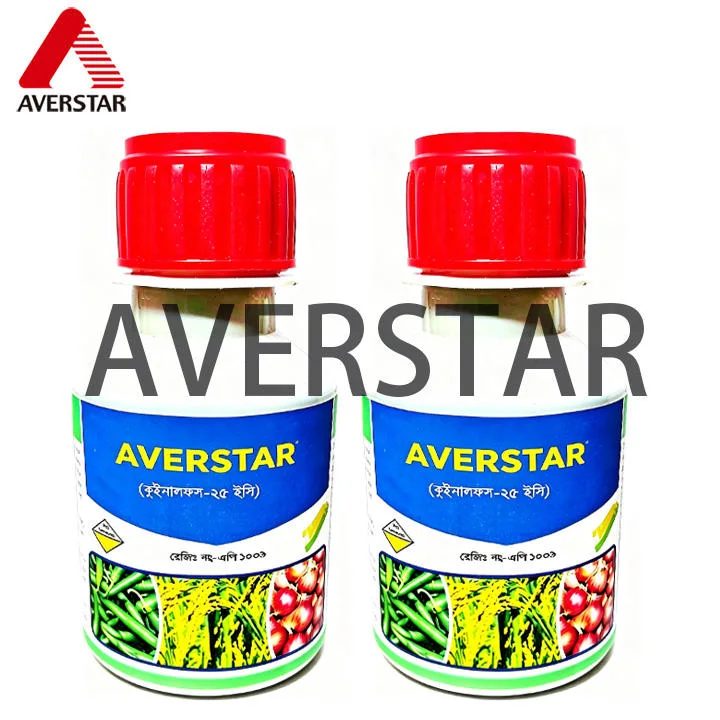
Organophosphates are some of the oldest broad-spectrum insecticides still traded, and they remain in demand in many markets for field crops, stored grain and premises pest control. They are also among the most closely regulated. For importers and distributors, the first questions are therefore registration status, the exact use the product is registered for and operator safety, before concentration and price.
Averstar's catalogue lists diazinon 25% and 60% EC, chlorpyrifos 0.5% DP and a 20% EC for public health use, quinalphos 25% EC, pirimiphos-methyl 55% EC with a pirimiphos-methyl and thiamethoxam GR, and profenofos 50% and 72% EC. This guide explains what the group does, how the actives are used and which documents to request. The approved destination-market label always decides the crops, pests, situations, dose and restrictions for the product actually supplied.
Quick answer: Confirm registration first, because several organophosphates are banned or restricted in many markets. Then match the active to its registered use: field crops, stored grain or public health. All are IRAC Group 1B, so rotate with other groups, and plan for operator protection and residue limits.
What organophosphates do
Organophosphates inhibit acetylcholinesterase, the enzyme that switches off nerve signals, so the insect's nervous system is overstimulated. The IRAC mode of action classification places them in Group 1B; the carbamates in Group 1A act on the same enzyme. Most are non-systemic, acting by contact, ingestion and in some cases as vapour, so coverage and timing determine results.
How the actives are used
University of Hertfordshire Pesticide Properties Database (PPDB) records describe the actives as follows:
- Diazinon: a broad-spectrum insecticide against sucking and chewing insects, with example uses in fruit, rice, sugarcane and vegetables, acting by contact, ingestion and vapour. Its livestock uses are registered separately.
- Chlorpyrifos: a broad-spectrum insecticide and acaricide for soil and foliage pests. The 0.5% DP is a dust, and the 20% EC for public health is for premises pest control under its own registration, not for crops.
- Quinalphos: a broad-spectrum insecticide and acaricide against caterpillars, aphids, mealybugs, mites and bollworms, with example uses in cotton, sugarcane, groundnuts, wheat and other crops.
- Pirimiphos-methyl: an insecticide with contact and vapour action used mainly to protect stored grain and in non-crop premises against weevils, flour mites and other storage pests. Because it is used on grain intended for food, residue limits are central to its use.
- Profenofos: used mainly against caterpillars and mites in a wide range of crops. Our cypermethrin guide covers the profenofos and cypermethrin mixtures.
A product registered for one use, such as stored grain or public health, cannot be sold for another use under that registration.
Registration, safety and residues
Several organophosphates have been banned or severely restricted in many markets; chlorpyrifos, for example, is no longer approved in the European Union. Registration status can also change at short notice, so confirm the current status of each active and use in every destination market before preparing samples or label artwork.
Organophosphates inhibit acetylcholinesterase in people as well as insects. Labels therefore set requirements for protective equipment, re-entry intervals and pre-harvest intervals, and distributor training should cover safe handling and first aid as described on the safety data sheet. For export crops, check the residue limits in the destination and importing markets, because some organophosphate limits are set at very low levels.
Resistance to Group 1B is widespread in several pests. Rotate with products from other IRAC groups rather than between organophosphates.
Compare the catalogue formulations
- Emulsifiable concentrates: Diazinon 25% EC and 60% EC, Quinalphos 25% EC, Pirimiphos-methyl 55% EC and Profenofos 50% / 72% EC. Each concentration is a separate registered product; the quotation, certificate and label must name the same one.
- Dust and granule: the chlorpyrifos 0.5% DP and the pirimiphos-methyl + thiamethoxam 16 g/kg / 3.6 g/kg GR, which pairs the organophosphate with a Group 4A neonicotinoid and is applied as granules according to its label.
Penn State Extension's overview of pesticide formulations compares these formulation types, and FAO/WHO pesticide specifications describe the properties buyers test, such as emulsion stability for EC products.
A product selection checklist
- Current registration status of the active and use in the destination market.
- The registered use: field crop, stored grain or public health.
- Target pests by species and the IRAC groups already used against them.
- Protective equipment, re-entry and pre-harvest intervals on the label.
- Residue limits in the destination and importing markets for treated crops or grain.
- Concentration and unit matched on quotation, certificate of analysis and label.
- Solvent-compatible packaging for EC products, safety data sheet and translated label artwork.
Build the inquiry around the intended use
Send the registered use, the target pests, the preferred active and concentration, the packaging and the destination market through our contact form. For a first order, a pesticide sample evaluation plan helps compare samples against the agreed specification before scaling up.
Frequently asked questions
Can chlorpyrifos still be imported?
It depends on the market. Chlorpyrifos is no longer approved in the European Union and is restricted elsewhere, while some markets still register certain uses. Confirm the current status and permitted use in the destination market before quoting.
Can a stored-grain product be sprayed on field crops?
Only if its label in the destination market includes that use. Pirimiphos-methyl products are commonly registered for stored grain and premises, and each use carries its own rates and residue requirements.
Does rotating diazinon and chlorpyrifos manage resistance?
No. Both are organophosphates in IRAC Group 1B. Rotate with an insecticide from another group, such as a pyrethroid or a newer mode of action registered for the same pest.
Authoritative references
- IRAC Mode of Action Classification - Insecticide Resistance Action Committee
- PPDB: Diazinon - University of Hertfordshire PPDB
- PPDB: Chlorpyrifos - University of Hertfordshire PPDB
- PPDB: Quinalphos - University of Hertfordshire PPDB
- PPDB: Pirimiphos-methyl - University of Hertfordshire PPDB
- PPDB: Profenofos - University of Hertfordshire PPDB
- Pesticide Formulations - Penn State Extension
- Pesticide Specifications and Quality Control (FAO/WHO JMPS) - FAO