
Averstar Chemical Editorial Team Updated September 28, 2026
FS, WS and DS Seed Treatment Formulations: A Buyer Comparison
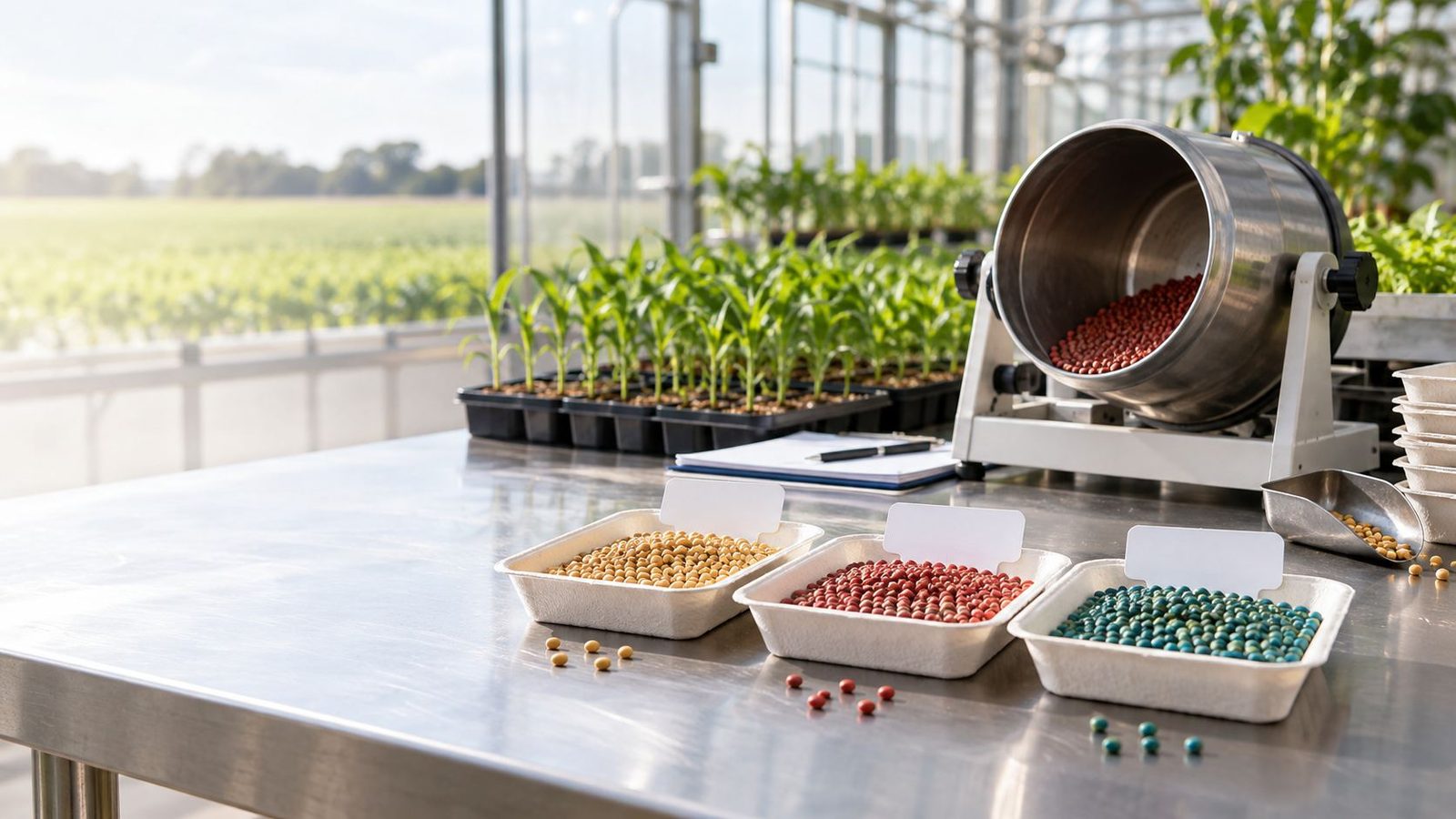
FS, WS and DS are formulation codes used for different seed-treatment product forms. FS denotes a flowable concentrate for seed treatment. WS is a water-dispersible powder prepared as a slurry before treatment. DS is a powder intended for dry seed treatment. The code helps define quality tests and handling, but it does not tell a buyer which product is registered or suitable for a particular crop.
Selection should start with the destination label and the seed-treatment process. Commercial seed plants, small batch treaters and manual systems can have different equipment, dust-control and metering needs. The chosen product must match the approved use, equipment capability and worker-protection requirements.
Key Takeaways
- FS is a flowable liquid concentrate, WS is a water-dispersible powder slurry and DS is a powder for dry seed treatment.
- The codes describe physical form, not interchangeability, approved crops or application rate.
- Buyers should compare treatment uniformity, dust control, package protection, stability and registered equipment conditions.
How the Three Formulations Differ
FS: Flowable Concentrate for Seed Treatment
FS products are liquid suspensions designed for seed treatment. Procurement review should consider homogeneity after agitation, pourability, redispersion, active ingredient content, wet sieve or particle-related performance, storage stability and package compatibility. Metering accuracy depends on the treated-seed system and the registered process.
WS: Water-Dispersible Powder for Slurry Treatment
WS products are powders dispersed in water to form a treatment slurry. Buyers should review dispersibility, suspensibility, wet sieve, dustiness, flowability and moisture protection. The make-up water and mixing process can affect slurry behavior, so supplier demonstrations must be checked against label directions and local equipment.
DS: Powder for Dry Seed Treatment
DS products are applied as dry powders where the label and system permit. Dustiness, particle distribution, adhesion to seed, operator exposure control and package closure are central questions. A low purchase price does not offset a process that cannot control dust or achieve the required treatment uniformity.
What the FAO/WHO Manual Contributes
The FAO/WHO specifications manual organizes formulation-specific guidance and includes FS among liquid suspension formulations, while international formulation-code lists distinguish FS, WS and DS. Buyers can use this structure to avoid applying a generic test panel to unlike product forms.
A current product specification should identify the applicable methods and limits. Test needs also depend on the active ingredient and product design. Do not insert every possible clause without technical justification, but do not omit a performance property simply because the COA template has never included it.
A Seed Treatment Procurement Checklist
- Confirm crop, seed type, pest or disease target, treatment location and approved equipment from the current label.
- Compare concentration basis and treatment output instead of comparing price per litre or kilogram alone.
- Request formulation-specific quality limits, treatment-uniformity evidence and storage-stability data.
- Review colorant, dust-off, drying, flow and seed-plant compatibility under the registered process.
- Confirm packaging barrier, closure, palletization and transport conditions for liquid or moisture-sensitive products.
What Must Remain Product Specific
Formulation code does not determine application rate, crop safety, germination effect, efficacy or legal use. Those conclusions require the registered product, approved label and supporting data. Mixtures containing insecticide, fungicide or biological components also require review of every active and the finished combination.
When comparing liquid and solid options more broadly, use the EC, SC, WP and WG comparison framework while keeping seed-treatment-specific requirements separate.
A Practical Procurement Record
Record the agreed specification, test method and acceptance limit in the purchase file before a sample or batch is evaluated. The quotation, specification, certificate of analysis, safety data sheet, label artwork and packaging description should identify the same product configuration. If one document changes, check whether the others must be revised as well.
A laboratory result is meaningful only when the sample identity, batch number, sampling point, method version, units and acceptance criterion are traceable. Buyers should not compare two numbers merely because the parameter names look similar. Different methods, sample preparation or reporting bases can produce results that are not directly comparable.
Build the approval record before the purchase order is released. It should identify who approved the specification, which laboratory may perform release and dispute tests, how retained samples will be stored, and what happens when a result falls outside the agreed limit. The process should distinguish a confirmed failure from a sampling, method or transcription problem while keeping questioned stock under control.
Change control is equally important after approval. A new manufacturing source, formulant, concentration basis, package material, test method or label may alter the evidence needed for comparison. Require the supplier to notify the buyer before the change, then document whether fresh regulatory review, stability data, specification approval or customer acceptance is required.
Before final approval, ask a second reviewer to reconcile the technical conclusion with the actual purchase specification and proposed label. Independent review often catches unit differences, outdated methods, missing source identity and limits copied from the wrong formulation type.
This guide supports supplier qualification and document review. It does not replace a registered label, national pesticide law, a competent laboratory assessment or advice from a qualified local agronomist or regulatory specialist.
Frequently asked questions
What is the main difference between FS, WS and DS?
FS is a flowable liquid concentrate, WS is a powder dispersed in water for slurry treatment, and DS is used as a dry powder where approved.
Can an FS product replace a WS product with the same active ingredient?
Not automatically. Formulation, concentration, process, quality properties, registration and label directions can all differ.
Which quality issue is especially important for DS and WS products?
Dustiness and particle behavior deserve close attention, together with flowability, dispersion or adhesion properties relevant to the product.
What are the full forms of FS, WS and DS in seed treatment?
FS means flowable concentrate for seed treatment. WS means water-dispersible powder for slurry treatment. DS means powder for dry seed treatment. These codes describe formulation type, not an approved use rate or crop.
Authoritative references
- Manual on Development and Use of FAO and WHO Specifications for Pesticides - FAO/WHO Joint Meeting on Pesticide Specifications
- CIPAC Formulation Codes - Food and Agriculture Organization of the United Nations
- Pesticide Specifications - Food and Agriculture Organization of the United Nations