
Averstar Chemical Editorial Team Updated November 7, 2026
Dazomet 98% GR Soil Fumigant: Buyer Guide to Uses, Application and Safety
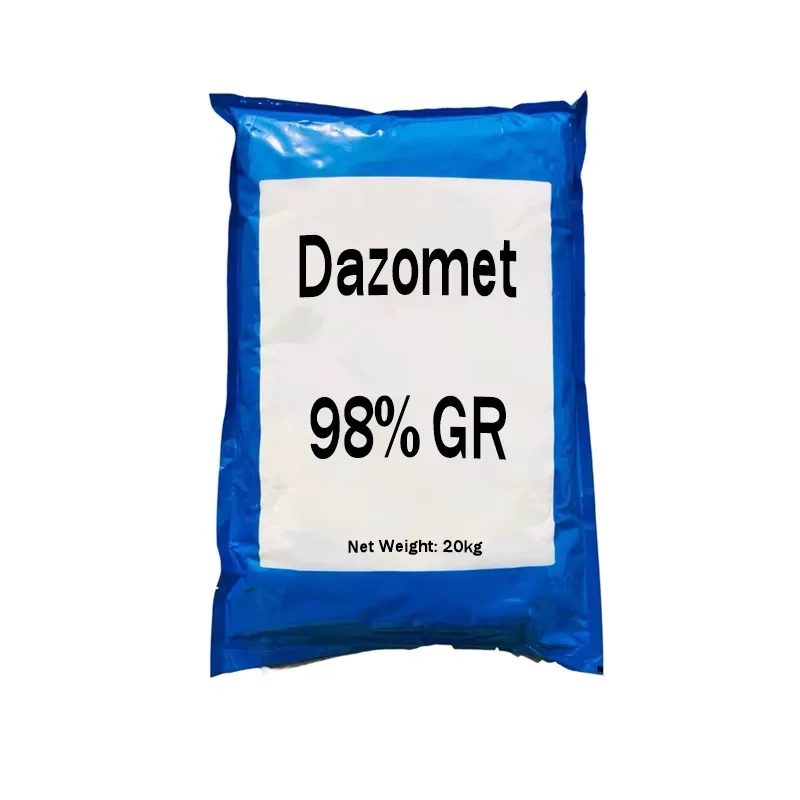
Dazomet is a granular soil fumigant used before planting to clean soil of nematodes, soil-borne fungi, soil insects and weed seeds. It is bought by nurseries, greenhouse growers, strawberry and vegetable producers and turf managers who need a clean start in soil that has built up pests over several crops. Because it kills almost everything living in the treated soil, including crop roots, it is used only before planting and only under the conditions its label sets.
Averstar's catalogue lists dazomet 98% GR. This guide explains how dazomet works, how a typical treatment is organised and which documents to request. The approved destination-market label always decides the permitted situations, dose, soil conditions, waiting times and restrictions for the product actually supplied.
Quick answer: Dazomet granules release a toxic gas in moist soil that controls nematodes, soil fungi, soil insects and germinating weed seeds. Use it only on unplanted soil, prepared and sealed as the label describes, and plant only after the label's waiting time and a check that the gas has gone. Confirm registration and operator safety requirements first.
How dazomet works
The University of Hertfordshire Pesticide Properties Database (PPDB) describes dazomet as a multi-purpose, non-selective pre-plant soil fumigant. In moist soil it breaks down to release methyl isothiocyanate (MITC), a gas that is toxic to many soil organisms. The gas spreads through the soil pores, acts for a period, and then dissipates, after which the soil can be planted.
The PPDB notes that dazomet is often supplied as granules applied directly to the soil and incorporated. Granules are easier to transport and handle than liquid or gas fumigants, but the release of the gas depends heavily on soil moisture and temperature.
What dazomet controls
According to the PPDB, dazomet controls nematodes, soil fungi, soil insects such as wireworms and cutworms, and weed seeds. Example applications include nursery sites, potting soil, glasshouse and field soils for tomatoes and strawberries, tobacco seedbeds, ornamentals, turf and golf greens.
Because it acts on a broad range of organisms, dazomet is chosen when several soil problems occur together, for example root-knot nematodes with Fusarium or Verticillium wilt and a heavy weed seed bank. It also affects beneficial soil organisms, so it is a reset rather than a routine treatment.
How a treatment is organised
Labels set the details, but treatments usually follow the same sequence:
- Prepare the soil: cultivate to a fine tilth, remove crop residues and bring the soil to the moisture and temperature range on the label, because the gas is released from moist, warm soil.
- Apply and incorporate: spread the granules evenly at the labelled dose and mix them into the soil to the stated depth.
- Seal: cover with plastic film, or seal the surface with water or compaction as the label allows, to hold the gas in the soil.
- Wait: keep the seal for the exposure period, then remove the film and cultivate to let the remaining gas escape.
- Check before planting: respect the label's waiting time; a simple seed germination test on treated soil is often used to confirm that no gas remains before the crop is planted.
Cold or dry soil slows the release and breakdown of the gas, which lengthens the waiting time and raises the risk of crop injury if planting is too early.
Safety, environment and registration
Methyl isothiocyanate is irritating to the eyes, skin and lungs, so labels set protective equipment, re-entry restrictions and distances from occupied buildings and neighbouring crops. The PPDB lists an acute 96-hour LC50 of 0.3 mg/L for dazomet in freshwater fish, which indicates high toxicity, so treated soil and runoff must be kept out of water.
The PPDB records dazomet as approved in the European Union, where use conditions are strict, and other markets register it for specific crops and situations. Confirm the current status, the permitted uses and any requirement for trained or licensed applicators in the destination market.
Fumigation or targeted products
A fumigant is not always needed. Where the problem is mainly nematodes, a targeted nematicide may be enough; our fluopyram guide covers one option. Where the problem is mainly seedling diseases, fungicides such as hymexazol, described in our rice fungicide guide, are used for specific pathogens. Crop rotation, resistant varieties and clean planting material reduce how often fumigation is needed.
Compare the catalogue formulation
- Dazomet 98% GR: granules with a high active content. Buyers usually check the purity, particle size and moisture content on the certificate of analysis, because moisture in storage can start to break down the active. Keep bags sealed, dry and cool.
Penn State Extension's overview of pesticide formulations compares granules with other formulation types, and FAO/WHO pesticide specifications describe the properties buyers test.
A product selection checklist
- Current registration status and permitted situations in the destination market.
- The soil problem: nematodes, soil-borne disease, soil insects, weed seeds or a combination.
- Soil type, moisture and temperature at the planned treatment time.
- Sealing method, exposure period and plant-back waiting time on the label.
- Distances from buildings, neighbouring crops and water, and applicator licensing.
- Purity, particle size and moisture on the certificate of analysis.
- Moisture-proof packaging, safety data sheet and translated label artwork.
Build the inquiry around the intended use
Send the crop, the soil problem, the treatment situation, the expected quantity, the packaging and the destination market through our contact form. For a first order, a pesticide sample evaluation plan helps compare samples against the agreed specification before scaling up.
Frequently asked questions
Can dazomet be applied around growing plants?
No. Dazomet releases a gas that kills plant roots as well as pests, so it is used only on unplanted soil before sowing or planting, as the label describes.
Why must the soil be moist before treatment?
Dazomet breaks down to release its active gas in moist soil. In dry soil little gas is released and control is poor; the label gives the moisture and temperature range needed.
How long after treatment can a crop be planted?
The waiting time depends on soil temperature, soil type and the label. Growers often confirm the soil is safe with a seed germination test before planting.
Authoritative references
- PPDB: Dazomet - University of Hertfordshire PPDB
- Pesticide Formulations - Penn State Extension
- Pesticide Specifications and Quality Control (FAO/WHO JMPS) - FAO