
Averstar Chemical Editorial Team Updated November 7, 2026
ACCase Grass Herbicides: Haloxyfop, Quizalofop, Fenoxaprop and More
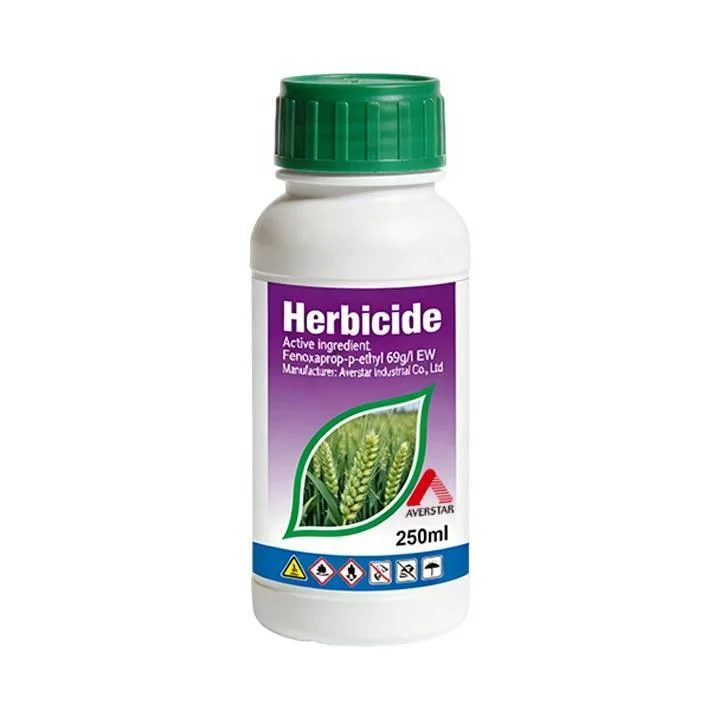
Haloxyfop, quizalofop, cycloxydim, clodinafop, fenoxaprop and metamifop all kill grass weeds through the same enzyme, and they often appear together in a herbicide price list. They are not interchangeable. Some are used to remove grasses from broadleaf crops, some to remove grass weeds from cereals, and some in rice, and using the wrong one can destroy the crop. Selection starts with the crop on the label.
Averstar's catalogue lists haloxyfop-P-methyl 10.8% EC and 108 g/L EC, quizalofop-P-ethyl 5% EC, cycloxydim 10% EC, clodinafop-propargyl 40% EC, fenoxaprop-P-ethyl 69 g/L EW and metamifop 10% EC. This guide explains what the group does, which product fits which crop and which documents to request. The approved destination-market label always decides the permitted crops, dose, timing and restrictions for the product actually supplied.
Quick answer: Choose the active by crop: haloxyfop, quizalofop and cycloxydim for broadleaf crops; clodinafop and fenoxaprop for cereals as labelled; metamifop and some fenoxaprop products for rice. All are HRAC Group 1, so they control grasses only and share resistance risk.
What ACCase herbicides do
These actives inhibit acetyl-CoA carboxylase (ACCase), the enzyme grasses need to make fatty acids for new cell membranes, and the HRAC global herbicide classification places them in Group 1. Most broadleaf plants carry a form of the enzyme that these herbicides do not affect, so the group controls grass weeds but not broadleaf weeds or sedges. Growth stops soon after application, and visible yellowing and death of the growing point follow over the next days.
The group has two chemical families. Haloxyfop, quizalofop, clodinafop, fenoxaprop and metamifop are aryloxyphenoxypropionates, often called "fops"; cycloxydim is a cyclohexanedione, or "dim". Both families work on the same target.
Match the active to the crop
The University of Hertfordshire Pesticide Properties Database (PPDB) records show how differently the actives are positioned:
- Broadleaf crops: haloxyfop-P-methyl, quizalofop-P-ethyl and cycloxydim are post-emergence grass herbicides for crops such as sugarbeet, oilseed rape, potatoes, peas, beans, linseed, sunflowers and vegetables. They would injure wheat, maize, rice or other grass crops.
- Cereals: clodinafop-propargyl is used for annual grass weeds such as wild oats, canary grass and ryegrass in wheat, triticale and rye. Fenoxaprop-P-ethyl is used against grasses such as wild oats, foxtails and barnyardgrass in cereals, rice and turf, depending on the product.
- Rice: metamifop is a post-emergence grass herbicide with example uses in rice, cereals and turf. Our cyhalofop-butyl guide covers another Group 1 rice herbicide.
A product registered for one of these crop groups cannot be moved to another by changing the rate.
Isomers and safeners
The "-P-" in haloxyfop-P-methyl, quizalofop-P-ethyl and fenoxaprop-P-ethyl marks the herbicidally active isomer. Older products contained a mixture of isomers and were labelled at different rates, so confirm that the quotation, certificate of analysis and registration all name the same "-P-" active.
In cereals, the crop's tolerance to clodinafop and fenoxaprop usually depends on a safener included in the registered formulation. Confirm that the quoted product contains the safener and the ratio named on the destination-market registration; a product without it may injure the cereal.
Compare the catalogue formulations
- Haloxyfop-P-methyl 10.8% EC and 108 g/L EC: if 10.8% is weight per volume, the two describe the same concentration. Check which unit the registration uses and keep it identical on every document. The trifloxysulfuron + haloxyfop-P-methyl OD pairs haloxyfop with an ALS inhibitor, as explained in our trifloxysulfuron guide.
- Quizalofop-P-ethyl 5% EC, Cycloxydim 10% EC, Clodinafop-propargyl 40% EC and Metamifop 10% EC: emulsifiable concentrates, solvent-based liquids that form an emulsion in water.
- Fenoxaprop-P-ethyl 69 g/L EW: an emulsion in water, in which the active is carried in oil droplets dispersed in water; it is checked for emulsion stability and should be protected from freezing.
Penn State Extension's overview of pesticide formulations explains the handling differences between EC and EW products. For quality checks, ask for emulsion stability and low-temperature results, as described in FAO/WHO pesticide specifications.
Resistance and tank mixes
Resistance to Group 1 herbicides is well documented in grass weeds such as ryegrass, blackgrass and wild oats. Resistance to one ACCase herbicide often extends to others in the group, although patterns differ between fops and dims, so switching between them is not a dependable rotation. Our herbicide resistance management questions help plan a programme with other groups.
Tank-mixing grass herbicides with some broadleaf herbicides can reduce grass control. Follow the label's mixing and adjuvant instructions, and treat grasses while they are small and actively growing rather than under drought stress.
A product selection checklist
- The crop on the destination-market label: broadleaf crop, cereal or rice.
- Target grasses by species and growth stage, and any history of ACCase resistance.
- The "-P-" active and, for cereal products, the registered safener and ratio.
- Concentration and unit matched on quotation, certificate of analysis and label.
- Adjuvant requirements and any restrictions on mixing with broadleaf herbicides.
- Formulation tests: emulsion stability and low-temperature behaviour for EC and EW.
- Packaging compatible with solvent-based liquids, safety data sheet and translated label.
Build the inquiry around the intended use
Send the crop, the target grasses, the preferred active and concentration, the packaging and the destination market through our contact form. For a first order, a pesticide sample evaluation plan helps compare samples against the agreed specification before scaling up.
Frequently asked questions
Can haloxyfop or quizalofop be used in wheat?
No. Wheat is a grass, and these broadleaf-crop grass herbicides would injure it. Grass weeds in cereals need a cereal-selective product such as clodinafop or fenoxaprop, used only as its label allows.
Do these herbicides control broadleaf weeds or sedges?
No. ACCase herbicides control grasses only, because broadleaf plants and sedges are naturally tolerant. Broadleaf weeds and sedges need a herbicide from another group.
Is haloxyfop-P-methyl 10.8% EC the same as 108 g/L EC?
If the percentage is weight per volume, yes, the concentration is the same. Confirm the unit on the registration and use it consistently on the quotation, certificate and label.
Authoritative references
- Global Herbicide Classification Lookup - Herbicide Resistance Action Committee
- PPDB: Haloxyfop-P-methyl - University of Hertfordshire PPDB
- PPDB: Quizalofop-P-ethyl - University of Hertfordshire PPDB
- PPDB: Cycloxydim - University of Hertfordshire PPDB
- PPDB: Clodinafop-propargyl - University of Hertfordshire PPDB
- PPDB: Fenoxaprop-P-ethyl - University of Hertfordshire PPDB
- PPDB: Metamifop - University of Hertfordshire PPDB
- Pesticide Formulations - Penn State Extension
- Pesticide Specifications and Quality Control (FAO/WHO JMPS) - FAO