
Averstar Chemical Editorial Team Updated August 30, 2026
Thiamethoxam Formulations for Importers: WG, SC, GR and Seed Treatment
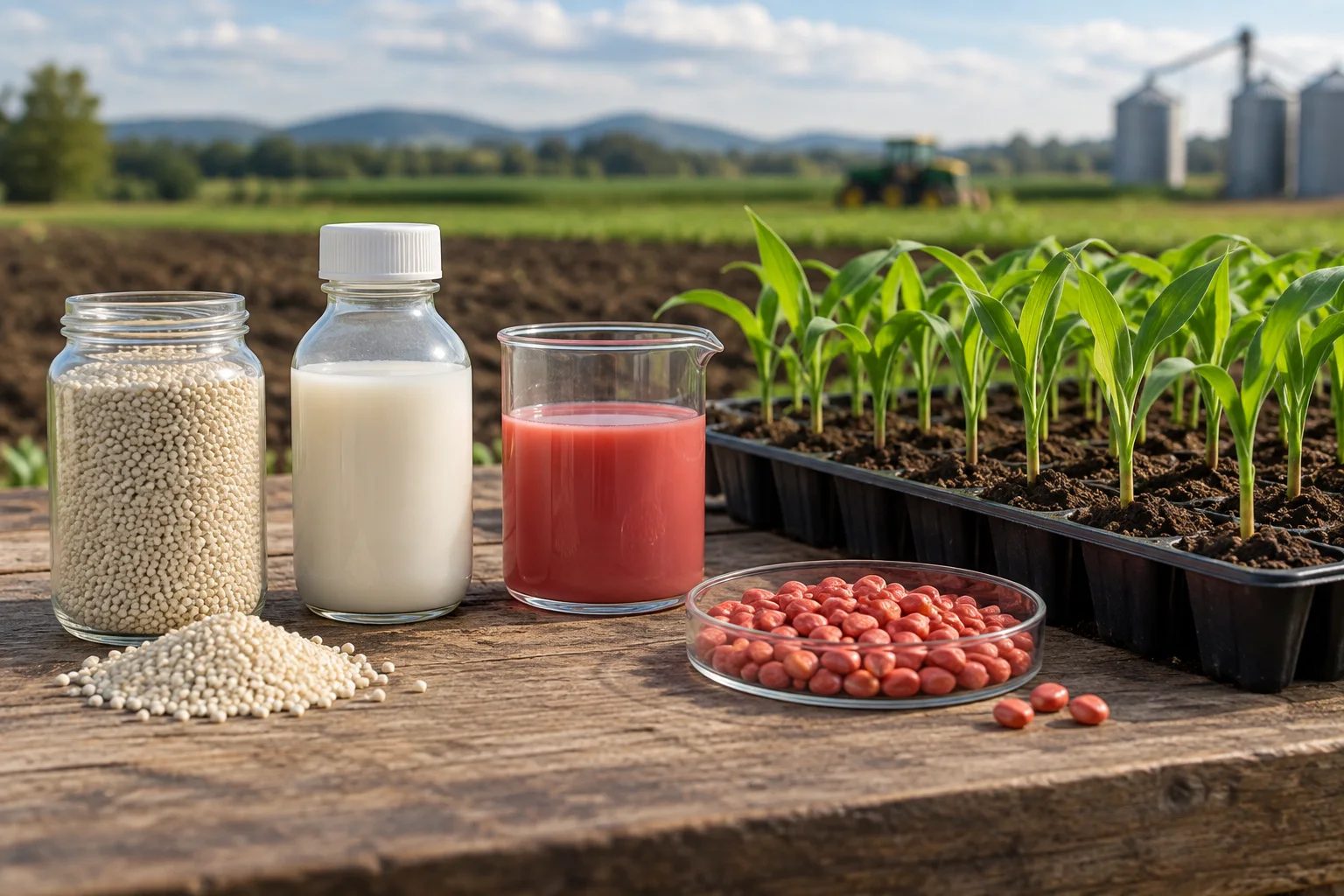
Thiamethoxam Formulations for Importers: WG, SC, GR and Seed Treatment
This guide explains how professional buyers can compare thiamethoxam formulations across foliar, soil and seed-treatment segments before shortlisting suppliers. It is an educational sourcing resource, not an application recommendation, product label or legal opinion. Product approval, label directions and commercial legality must always be verified for the destination jurisdiction.
Thiamethoxam is a systemic neonicotinoid insecticide classified by IRAC in Group 4A as a nicotinic acetylcholine receptor competitive modulator. Like other actives in the class, its registration position differs sharply between markets — several jurisdictions have withdrawn or restricted outdoor uses — so confirm the current national decision, and which segments remain open, before comparing offers.
Foliar and soil configurations
Averstar lists straight thiamethoxam as Thiamethoxam 25% WG, the high-load Thiamethoxam 75% WG and Thiamethoxam 20% / 30% SC, plus the soil-applied granule mixture Pirimiphos-Methyl + Thiamethoxam 16g/kg / 3.6g/kg GR.
High-load WG configurations concentrate more active into each shipped kilogram and avoid liquid packaging; SC offers should be reconciled to one concentration basis using the density on the specification. A GR granule is a soil-application product with its own handling, spreading and labelling questions — do not treat it as interchangeable with foliar supply of the same actives.
Seed-treatment segment
For seed treatment, Averstar lists the triple combination Difenoconazole + Fludioxonil + Thiamethoxam 2.2% / 2.2% / 22.6% FS, which pairs the insecticide with two fungicide partners in a flowable concentrate for seed treatment.
Seed-treatment procurement carries additional questions: colourant requirements so treated seed is visibly marked, adhesion and dust-off behaviour, compatibility with treating equipment, and destination rules on treated-seed labelling and movement. In markets that restrict neonicotinoids, seed-treatment uses are often regulated separately from foliar uses — confirm the segment-specific position rather than a general answer.
Ready-mixed foliar combination
Acetamiprid + Thiamethoxam 25% / 25% WG combines two Group 4A actives for sucking-pest programmes where that positioning is registrable. A mixture of two actives from the same IRAC group is a spectrum decision, not a resistance-management rotation; every active and the mixture itself must be acceptable in the destination market.
Packaging, shipment and sample planning
WG and GR configurations ship in moisture-protective bags or foil packaging inside export cartons; SC and FS offers are quoted in bottles, co-packs and drums. Ask each supplier to state packaging materials, net contents per unit and the export carton configuration on the quotation, and confirm that proposed retail pack sizes are acceptable under destination labelling rules before artwork is prepared.
When samples are needed for registration or laboratory verification, agree in writing what the sample represents: the batch, the formulation version and the specification revision. A sample drawn from a pilot batch does not prove that commercial shipments will match, so tie the commercial contract to the certificate of analysis of each shipped batch rather than to the sample alone.
Documents to request before shortlisting
An evidence-led comparison needs the same document set from every candidate supplier: the certificate of analysis, the proposed or registered label, the safety data sheet, the product specification, packaging details and the manufacturing-site identity. Ask for the version and date of each document, and keep the records together so that differences between a quotation, a label and a technical sheet can be resolved before commercial commitments are made.
For adjacent reading, see the imidacloprid formulations buyer guide, the acetamiprid formulations buyer guide and the insecticide mode-of-action sourcing guide.
Registration and residue references
Use the FAO pest and pesticide management resources for framework guidance and the Codex pesticide residues database for internationally referenced maximum residue limits, then confirm current national decisions with the destination authority. Nothing in this guide replaces the registered label or local regulatory advice.
Compare Averstar thiamethoxam products
Averstar supplies the thiamethoxam configurations linked above with COA, SDS, label and registration documentation support. Browse the insecticides category and the seed treatments category to compare formulations, and use the quotation form on any product page to confirm current MOQ, packaging options, documents and delivery terms for your destination market.
Frequently asked questions
Are seed-treatment and foliar thiamethoxam regulated the same way?
Often not. In markets that restrict neonicotinoids, seed-treatment uses are frequently regulated separately from foliar uses. Confirm the segment-specific position with the destination authority.
What extra checks apply to an FS seed-treatment offer?
Colourant requirements, adhesion and dust-off behaviour, compatibility with treating equipment, and destination rules on treated-seed labelling and movement. Confirm these on the specification.
Does this guide recommend application rates or crops?
No. It is a pre-screening resource for sourcing conversations. Use directions, approved crops and rates are governed by the registered label in the destination market.
Authoritative references
- IRAC Mode of Action Classification - Insecticide Resistance Action Committee (IRAC)
- Pest and Pesticide Management - Food and Agriculture Organization of the United Nations (FAO)
- Codex Pesticides Residues Database - Codex Alimentarius Commission (FAO/WHO)