
Averstar Chemical Editorial Team Updated November 7, 2026
Linuron vs Diuron: Urea Herbicide Formulation Buyer Guide
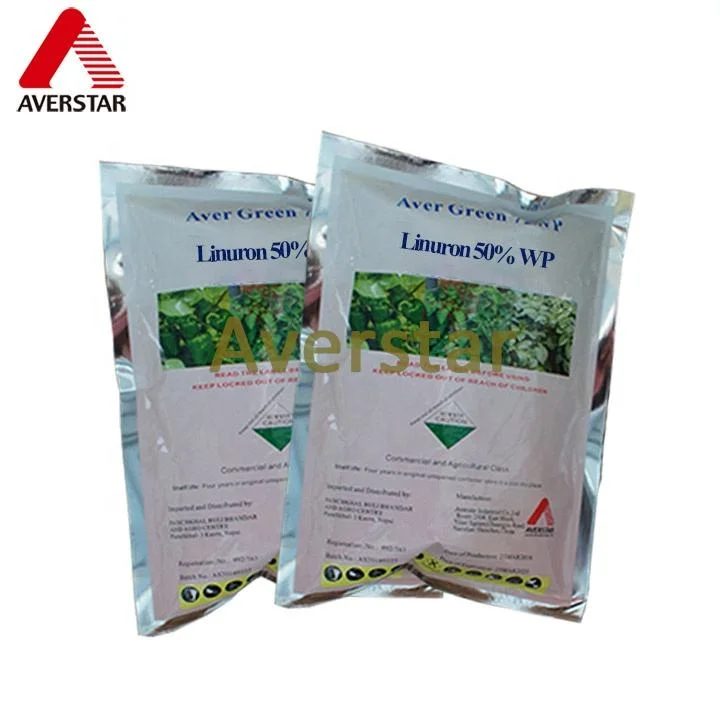
Linuron and diuron are both substituted urea herbicides that inhibit photosynthesis, and they often appear side by side in herbicide price lists. They are related, but they are registered for different crops and situations, and diuron also appears in a cotton defoliant mixture that is not a weed-control product at all. Choosing between them starts with the crop, the weeds and the soil, not with the concentration.
Averstar's catalogue lists linuron 450 g/L SC, 50% SC and 50% WP, diuron 80% WP, a diuron and butralin herbicide mixture, and a thidiazuron and diuron product for cotton. This guide explains what the two actives share, how they differ, what each mixture is for and which documents to request. The approved destination-market label always decides the permitted crops, dose, timing and restrictions for the product actually supplied.
Quick answer: Choose linuron or diuron by the crop and use on the destination-market label, because their selectivity differs. Both act through soil and leaves on photosystem II, so mixing one with the other does not add a mode of action. Treat the thidiazuron and diuron product as a cotton harvest aid, not as a herbicide.
What linuron and diuron share
Both actives inhibit photosynthesis at photosystem II. The HRAC global herbicide classification groups them with the triazines and other photosystem II inhibitors that bind at the same site, so they share a mode of action with products such as atrazine; our atrazine formulation guide covers that family from the triazine side. Repeating products from this group selects for resistant weeds in the same way, so rotation with other groups still applies.
Both also have residual soil activity. How well a soil-applied herbicide works, and how safe it is for the crop, depends on soil texture, organic matter and moisture, which is why labels often set rates by soil type and restrict use on very light or very organic soils.
How linuron and diuron differ
The University of Hertfordshire Pesticide Properties Database (PPDB) entry for linuron describes a selective, systemic herbicide with contact and residual action, used before and after weed emergence against annual grasses and broadleaf weeds. Its example uses include carrots, parsnips, asparagus, beans, cereals and cotton.
The PPDB entry for diuron describes a pre-emergence residual herbicide absorbed mainly through the roots. Its example uses include sugarcane, cotton, fruit crops such as bananas, pineapples and grapes, cereals and non-crop land, where higher rates give total weed control.
The practical consequences:
- A crop on the linuron label is not automatically on the diuron label, and the reverse.
- Linuron is often positioned for selective use in vegetable crops; diuron more often for plantation, sugarcane and non-crop residual control.
- Both are restricted in some markets. The PPDB records list linuron and diuron as not approved under Great Britain's pesticide rules, so confirm the status in each destination market before quoting.
Compare the catalogue formulations
- Linuron 450 g/L SC and Linuron 50% SC: suspension concentrates, water-based liquids that need agitation before use and are tested for suspensibility. Note the units: 450 g/L is grams per litre, while 50% may be by weight or by volume, so the two are different products unless the unit and density match.
- Linuron 50% WP and Diuron 80% WP: wettable powders, which are mixed into water as a suspension and need dust-tight packaging and careful handling during mixing. Penn State Extension's overview of pesticide formulations compares wettable powders with liquid formats.
For quality checks, ask for the certificate of analysis together with suspensibility and wettability results for powders and storage stability for SC products, as described in FAO/WHO pesticide specifications.
What the mixtures are for
- Diuron + butralin 180 g/L / 240 g/L SC: the PPDB describes butralin as a dinitroaniline pre-emergence herbicide that inhibits microtubule assembly in germinating seedlings, a different HRAC group from diuron. The mixture therefore combines two residual modes of action. Our pendimethalin guide covers another dinitroaniline in more detail.
- Thidiazuron + diuron 360 g/L / 180 g/L SC: the PPDB describes thidiazuron as a plant growth regulator that stimulates ethylene production in cotton and is used as a defoliant. This product is a harvest aid applied to cotton at the end of the season according to its label, not a weed-control herbicide.
A ready mixture is legal only where that exact mixture is registered; two single-active registrations do not authorise a combined product.
A product selection checklist
- The crop and use on the destination-market label: selective use, plantation, non-crop land or cotton defoliation.
- Soil texture and organic matter where the product will be applied.
- Target weeds by species, and the other herbicide groups already used.
- Linuron, diuron or a named mixture, and whether a partner adds a second group.
- Concentration, unit and formulation code matched on quotation, certificate and label.
- Formulation tests: suspensibility and wettability for WP, storage stability for SC.
- Packaging, safety data sheet and translated label artwork, including any water-protection restrictions.
Build the inquiry around the intended use
Send the crop and use, the soil type, the target weeds, the preferred product and concentration, the packaging and the destination market through our contact form. For a first order, a pesticide sample evaluation plan helps compare samples against the agreed specification before scaling up.
Frequently asked questions
Can diuron replace linuron in vegetable crops?
Not by assumption. The two actives have different registered crops and selectivity. Use a product only in the crops its own destination-market label lists.
Is thidiazuron + diuron a herbicide?
No. It is a cotton harvest aid: thidiazuron promotes leaf drop before picking, and the product is applied according to its defoliant label. Do not position it for weed control.
Does a linuron and diuron programme give two modes of action?
No. Both are photosystem II inhibitors in the same HRAC group, so alternating them does not rotate modes of action. A partner from another group, such as butralin in the diuron mixture, adds a second mode.
Authoritative references
- Global Herbicide Classification Lookup - Herbicide Resistance Action Committee
- PPDB: Linuron - University of Hertfordshire PPDB
- PPDB: Diuron - University of Hertfordshire PPDB
- Pesticide Formulations - Penn State Extension
- Pesticide Specifications and Quality Control (FAO/WHO JMPS) - FAO
- PPDB: Butralin - University of Hertfordshire PPDB
- PPDB: Thidiazuron - University of Hertfordshire PPDB