
Averstar Chemical Editorial Team Updated November 7, 2026
Dinotefuran vs Flonicamid: Sucking Pest Insecticide Guide
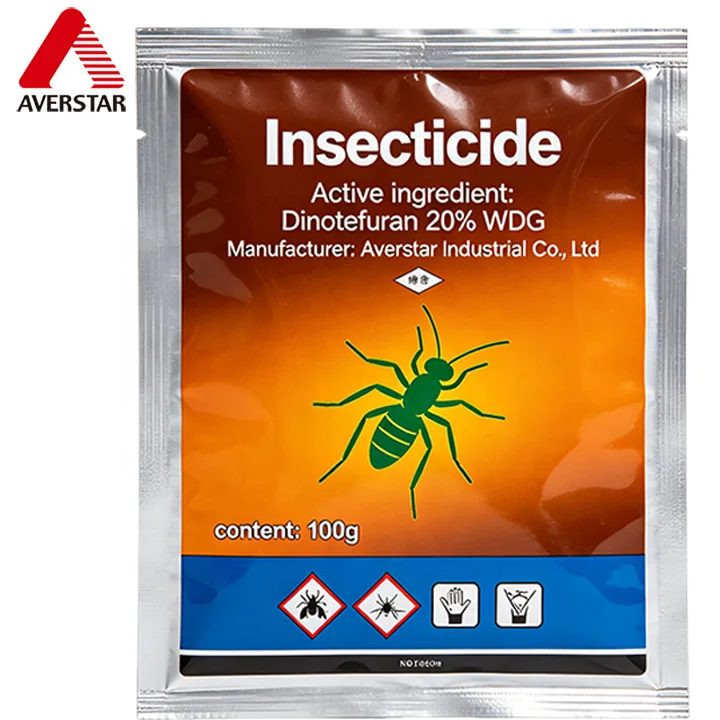
Aphids, whiteflies, planthoppers and thrips damage crops by feeding on sap, and several of them also spread plant viruses. Buyers looking for a "sucking pest insecticide" often meet dinotefuran, flonicamid and mixtures with pymetrozine or nitenpyram in the same quotation. These products belong to different insecticide groups, and the group decides how they fit a spray programme, how they behave after spraying and where they are restricted.
Averstar's catalogue lists dinotefuran 20% SC and 20% WG, flonicamid 10% SC and 500 g/kg WG, and two dinotefuran mixtures. This guide explains what each active does, how to read the mixtures and which documents to request. The approved destination-market label always decides the crops, pests, dose, timing and restrictions for the product actually supplied.
Quick answer: Choose by the target pest and the insecticide groups already used in the crop. Dinotefuran is a neonicotinoid (IRAC Group 4A); flonicamid (Group 29) and pymetrozine (Group 9B) stop insects feeding through different targets. Rotate between groups, and check that a mixture really adds a second group.
What dinotefuran does
The University of Hertfordshire Pesticide Properties Database (PPDB) entry for dinotefuran describes a neonicotinoid insecticide for a wide range of sucking pests, including whiteflies, mealybugs, thrips, planthoppers and leafminers, with example uses in vegetables, fruit, turf and rice. It is systemic, with contact and stomach action on the insect nervous system. In the IRAC mode of action classification, neonicotinoids form Group 4A.
Neonicotinoids are highly toxic to bees, and several markets restrict or prohibit their use, particularly around flowering crops; the PPDB record, for example, lists dinotefuran as not approved under Great Britain's pesticide rules. Confirm the registration and any pollinator restrictions in each destination market before preparing samples. Our imidacloprid formulation guide covers another Group 4A active.
What flonicamid does
The PPDB entry for flonicamid describes a systemic, selective insecticide with long-lasting activity against aphids, thrips and whiteflies, used in fruit, cereals, potatoes, cucumbers, tomatoes and other crops. It disturbs the insects' feeding behaviour as a chordotonal organ modulator, which IRAC places in Group 29.
That mode of action shapes what growers see. Treated insects stop feeding soon after exposure but may remain visible on the plant for some days, so field checks should look for new feeding damage and honeydew rather than only counting insects. Because Group 29 is unrelated to the neonicotinoids, flonicamid is often used as a rotation partner for them.
What the mixtures add
- Pymetrozine 40% + dinotefuran 10% WG: the PPDB describes pymetrozine as a selective insecticide for aphids and other sap-feeding pests that blocks feeding so the insects starve, acting on chordotonal organ TRPV channels (IRAC Group 9B). The mixture therefore combines a feeding blocker with a Group 4A neonicotinoid, two different groups.
- Dinotefuran 40% + nitenpyram 20% WP: the PPDB describes nitenpyram as a systemic nicotinic acetylcholine receptor insecticide used in rice and glasshouse crops, which is also Group 4A. Both partners are neonicotinoids, so the mixture does not add a second mode of action. Our nitenpyram guide covers that active in more detail.
A ready mixture is legal only where that exact mixture is registered; two single-active registrations do not authorise a combined product.
Compare the catalogue formulations
- Dinotefuran 20% SC and Dinotefuran 20% WG: the same concentration in two formulation types. The SC is a water-based suspension that needs agitation before use; the WG is a dry granule that disperses in the spray tank. They are separate registered products, so compare them on the registration available in your market, handling preferences and packaging rather than treating them as interchangeable.
- Flonicamid 10% SC and Flonicamid 500 g/kg WG: 500 g/kg means 50% by weight, so the WG is roughly five times as concentrated as the 10% SC. A stronger product needs less formulated material per hectare; it does not control more pests.
Penn State Extension's overview of pesticide formulations explains the handling differences between suspension concentrates and dry granules. For quality checks, ask for suspensibility and storage stability for SC products and dispersibility, wet sieve and dustiness for WG, as described in FAO/WHO pesticide specifications.
A product selection checklist
- The target pest by species and the crop on the destination-market label.
- The IRAC groups already used against that pest in the season, especially other Group 4A products.
- Pollinator restrictions and registration status of neonicotinoids in the destination market.
- Single active or mixture, and whether the partner adds a second IRAC group.
- Concentration and unit (% or g/kg) matched on quotation, certificate of analysis and label.
- Formulation tests: suspensibility for SC, dispersibility and wet sieve for WG and WP.
- Packaging, safety data sheet and translated label artwork, including bee-protection wording.
Build the inquiry around the intended use
Send the crop, the target pests, the groups already used, the preferred product and concentration, the packaging and the destination market through our contact form. For a first order, a pesticide sample evaluation plan helps compare samples against the agreed specification before scaling up.
Frequently asked questions
Is flonicamid a neonicotinoid?
No. Flonicamid is a chordotonal organ modulator in IRAC Group 29, unrelated to the Group 4A neonicotinoids such as dinotefuran, imidacloprid and nitenpyram. That is why it is often used as a rotation partner for them.
Does the dinotefuran + nitenpyram mixture rotate modes of action?
No. Both actives are Group 4A neonicotinoids. Rotate it with a product from another group, such as flonicamid or a pymetrozine-based product where registered.
Why are aphids still on the plant after a flonicamid spray?
Flonicamid stops insects feeding soon after exposure, but they can remain on the plant for some days before they die. Judge the result by whether new feeding damage and honeydew stop, as described on the label.
Authoritative references
- PPDB: Dinotefuran - University of Hertfordshire PPDB
- IRAC Mode of Action Classification - Insecticide Resistance Action Committee
- PPDB: Flonicamid - University of Hertfordshire PPDB
- PPDB: Pymetrozine - University of Hertfordshire PPDB
- PPDB: Nitenpyram - University of Hertfordshire PPDB
- Pesticide Formulations - Penn State Extension
- Pesticide Specifications and Quality Control (FAO/WHO JMPS) - FAO