
Averstar Chemical Editorial Team Updated November 7, 2026
Chlorothalonil, Captan, Copper and Fluazinam: Protectant Fungicide Buyer Guide
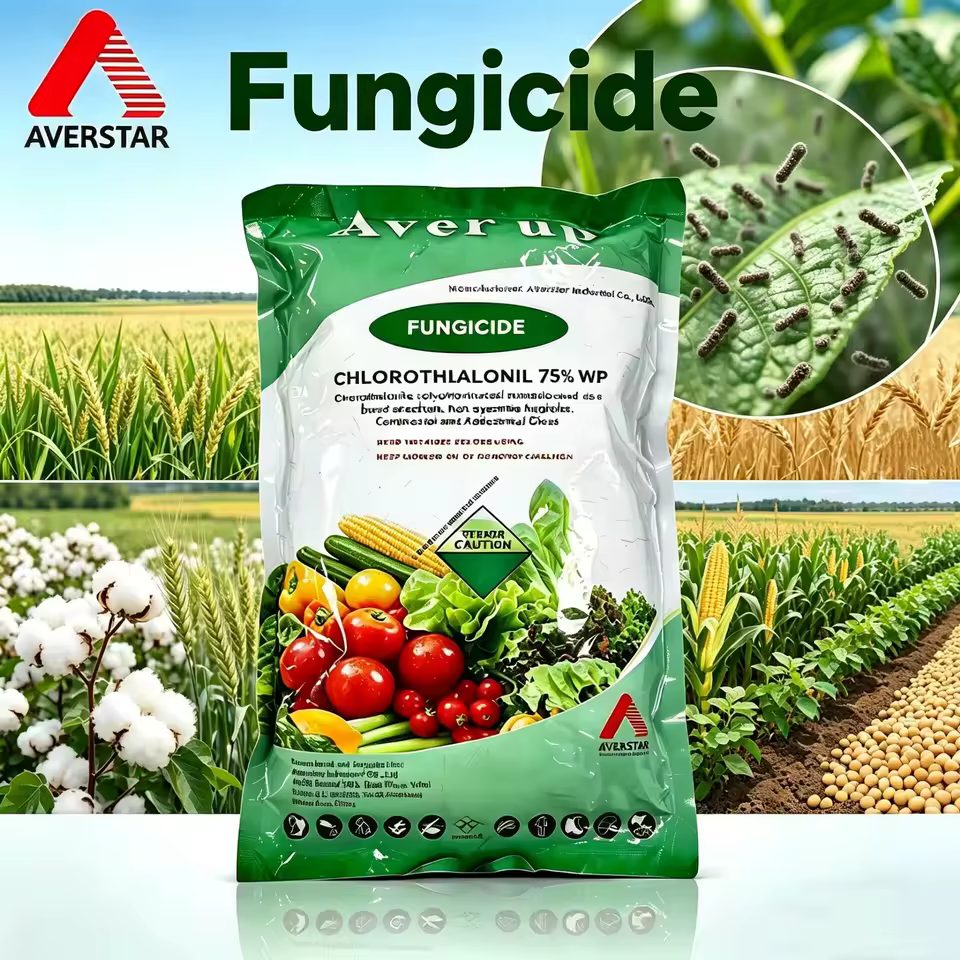
Protectant fungicides stay on the plant surface and stop fungal spores from germinating, so they work only when they are in place before infection. Several of them act on many sites in the fungal cell at once, which keeps their resistance risk low and makes them the standard partners for single-site systemic fungicides. Buyers comparing them need to know which diseases each controls, how timing affects results and where each is registered.
Averstar's catalogue lists chlorothalonil 75% WP, captan 80% WG, copper oxychloride 45% WP, fluazinam 500 g/L SC, fentin acetate 60% WP, and carbendazim as 50% WP and 98% technical material. This guide explains how the actives differ and which documents to request. The approved destination-market label always decides the permitted crops, diseases, dose, timing and restrictions for the product actually supplied.
Quick answer: Use chlorothalonil, captan or copper as low-resistance-risk protectants applied before infection, fluazinam for the blights and soil-borne diseases on its label, fentin acetate mainly for potato blights where registered, and carbendazim as a systemic partner used with resistance precautions. Confirm registration first, because status differs widely between markets.
How protectant fungicides work
A protectant forms a barrier on leaves, fruit or stems. The University of Hertfordshire Pesticide Properties Database (PPDB) describes chlorothalonil, for example, as non-systemic with foliar protectant action that prevents spore germination and zoospore motility. Because protectants do not move into new growth, coverage, timing before infection and the re-application interval on the label decide the result.
FRAC classifies chlorothalonil, captan and copper as multi-site fungicides in its M groups (M05, M04 and M01). Fungi rarely develop resistance to multi-site actives, which is why programmes pair them with single-site fungicides such as the triazoles to protect those products from resistance.
Chlorothalonil, captan and copper
- Chlorothalonil: a broad-spectrum fungicide against diseases such as rusts, leaf blights, anthracnose, downy mildew and Botrytis on cereals, vegetables, peanuts, potatoes and other crops, according to the PPDB. It is also used as a wood preservative under separate registrations.
- Captan: a non-systemic phthalimide fungicide with protective and some curative action, widely used on fruit such as apples, cherries, grapes and stone fruit against scab, brown rot, grey mould and other diseases. The PPDB also lists seed rot and damping-off.
- Copper oxychloride: a protectant copper fungicide and bactericide used as a foliar spray against leaf spots and downy mildew, with example uses in grapes, olives, tomatoes and beet crops. Activity against bacteria is what sets copper apart. Our metalaxyl guide covers the copper and metalaxyl-M mixtures.
Fluazinam, fentin acetate and carbendazim
- Fluazinam: a protective broad-spectrum fungicide used against late blight, Sclerotinia, white mould, clubroot and other diseases in potatoes, peanuts, grapes, fruit and crucifers. It uncouples oxidative phosphorylation, FRAC Group 29, and has some acaricidal activity.
- Fentin acetate: an organotin fungicide with mainly contact activity, used against early and late blights of potatoes and leaf spots in sugar beet, beans, coffee and other crops; it inhibits ATP synthase, FRAC Group 30. The PPDB also notes molluscicide and algicide activity and phytotoxicity to wet-seeded rice, so the crop and use on the label matter.
- Carbendazim: unlike the others, a systemic benzimidazole with protectant and curative activity against Septoria, Fusarium, Sclerotinia, grey mould and other diseases. It inhibits beta-tubulin assembly, FRAC Group 1, a single-site mode of action with a long history of resistance in many pathogens, so it belongs in mixtures or alternation with other groups as the label allows.
Registration status and residues
Registration status varies widely between markets. The PPDB records chlorothalonil, carbendazim and fentin acetate as not approved in the European Union, while captan, copper compounds and fluazinam are approved there. Many other markets still register some of these uses, so confirm the current status of each active and use in the destination market before preparing samples or label artwork. For export crops, also check residue limits in the importing market.
Compare the catalogue formulations
- Wettable powders: Chlorothalonil 75% WP, Copper Oxychloride 45% WP, Fentin Acetate 60% WP and Carbendazim 50% WP. They are tested for suspensibility and wettability and must stay dry.
- Captan 80% WG: water-dispersible granules, which produce less dust than a powder when measured.
- Fluazinam 500 g/L SC: a suspension concentrate expressed in grams per litre.
- Carbendazim 98% TC: technical material for formulators who hold a licence or registration, not an end-use product.
Penn State Extension's overview of pesticide formulations compares these types, and FAO/WHO pesticide specifications describe the properties buyers test.
A product selection checklist
- The target diseases, including bacterial diseases where copper is considered.
- Whether applications can be timed before infection, as protectants require.
- The single-site fungicides in the programme and the protectant partner they need.
- Current registration status of each active and use in the destination market.
- Residue limits in the importing market for treated export crops.
- Concentration and unit matched on quotation, certificate of analysis and label.
- Packaging, safety data sheet and translated label artwork.
Build the inquiry around the intended use
Send the crop, the target diseases, the fungicides already used, the preferred product and concentration, the packaging and the destination market through our contact form. For a first order, a pesticide sample evaluation plan helps compare samples against the agreed specification before scaling up.
Frequently asked questions
Why must chlorothalonil or copper go on before disease appears?
They are protectants: they stop spores germinating on the plant surface but do not cure established infections or move into new growth. Labels therefore time them ahead of disease risk and repeat them at set intervals.
Can carbendazim be used on its own all season?
It is not recommended. Carbendazim has a single-site mode of action, FRAC Group 1, and resistance to it is common in many pathogens. Use it in mixtures or alternation with fungicides from other groups, as the label allows.
Does copper oxychloride control bacterial diseases?
The PPDB describes it as a fungicide and bactericide, and copper is widely used against bacterial leaf spots. Use it against the diseases listed on the registered label in the destination market.
Authoritative references
- PPDB: Chlorothalonil - University of Hertfordshire PPDB
- FRAC Mode of Action Groups - Fungicide Resistance Action Committee
- PPDB: Captan - University of Hertfordshire PPDB
- PPDB: Copper oxychloride - University of Hertfordshire PPDB
- PPDB: Fluazinam - University of Hertfordshire PPDB
- PPDB: Fentin acetate - University of Hertfordshire PPDB
- PPDB: Carbendazim - University of Hertfordshire PPDB
- Pesticide Formulations - Penn State Extension
- Pesticide Specifications and Quality Control (FAO/WHO JMPS) - FAO