
Averstar Chemical Editorial Team Updated November 7, 2026
Chitin Synthesis Inhibitors: Lufenuron, Diflubenzuron and Chlorfluazuron
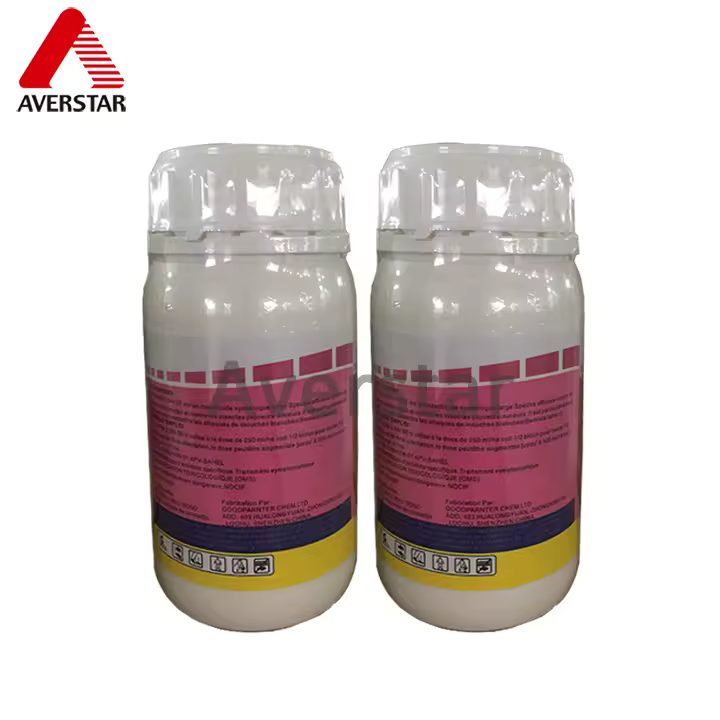
Chitin synthesis inhibitors, often called benzoylureas or insect growth regulators, stop insect larvae from forming a new cuticle when they moult. They are valued for caterpillar and leafminer programmes and for rotation with fast-acting insecticides, but they behave very differently from nerve poisons: larvae die at the next moult rather than within hours. Buyers who understand that timing choose and position these products far better.
Averstar's catalogue lists diflubenzuron 20% SC, chlorfluazuron 5% EC, a hexaflumuron and phoxim EC, and lufenuron 98% technical material. This guide explains how the group works, how the actives differ and which documents to request. The approved destination-market label always decides the crops, pests, dose, timing and restrictions for the product actually supplied.
Quick answer: Use these products against young larvae, early in an infestation, because they act at moulting and do not kill adults. All are IRAC Group 15, so rotate with other groups. Expect slower visible results than with a pyrethroid, and observe the label's restrictions near water.
How chitin synthesis inhibitors work
Insects build their exoskeleton from chitin and replace it at every moult. These actives inhibit chitin biosynthesis, so a treated larva cannot complete its next moult and dies. The IRAC mode of action classification places them in Group 15. Because they act through moulting, they affect larvae and nymphs but not adult insects, and the visible effect appears at the next moult, typically days after treatment.
How the actives differ
University of Hertfordshire Pesticide Properties Database (PPDB) records describe the actives as follows:
- Lufenuron: an insect growth regulator against biting and sucking insects, including moth and beetle larvae, leaf miners and fruit flies, acting mainly through ingestion; it also has veterinary uses, which are registered separately. The lufenuron 98% TC is technical material for formulators, not an end-use product. Our chlorantraniliprole guide covers the lufenuron and chlorantraniliprole mixture.
- Diflubenzuron: a persistent, selective insecticide with contact and stomach action against leaf-eating insects such as armyworms and leafminers.
- Chlorfluazuron: an anti-moulting agent that kills larvae and pupae of chewing pests such as diamondback moth, with further uses against thrips, whiteflies and termites listed in the record.
- Hexaflumuron: a systemic, stomach-acting insecticide against the larvae of moths, beetles, flies and other insect orders, used notably in termite baits that protect wood structures. In the hexaflumuron + phoxim 2% / 18% EC it is paired with phoxim, an organophosphate (IRAC Group 1B) with contact and stomach action and a short activity period, used against caterpillars and some soil insects, which adds a faster-acting component with a different mode of action.
Timing, resistance and water
Apply chitin synthesis inhibitors when larvae are young and before populations peak, as the label describes. Spraying large, late-stage larvae or a pest outbreak that needs immediate knockdown usually gives disappointing results, because the insects keep feeding until they moult.
Resistance to Group 15 has been reported in some caterpillar populations, so alternate with insecticides from other groups. The chlorantraniliprole guide linked above covers a Group 28 diamide that is often used as a rotation partner against caterpillars.
Crustaceans also build their shells from chitin, so these products can be highly toxic to aquatic invertebrates. Labels therefore commonly restrict use near water; include those restrictions in distributor training and translated label artwork.
Compare the catalogue formulations
- Diflubenzuron 20% SC: a suspension concentrate, water-based and tested for suspensibility.
- Chlorfluazuron 5% EC and the hexaflumuron + phoxim EC: emulsifiable concentrates that need solvent-compatible packaging.
- Lufenuron 98% TC: technical material, traded with its own purity specification to buyers who hold a formulation licence or registration.
Penn State Extension's overview of pesticide formulations compares these formulation types, and FAO/WHO pesticide specifications describe the properties buyers test.
A product selection checklist
- Target pests by species and the larval stage expected at the planned timing.
- Whether the situation needs fast knockdown, which these products do not provide alone.
- The IRAC groups already used, so Group 15 fits a rotation.
- Restrictions near water and any limits on aquatic exposure on the label.
- For technical material: the purity specification and the buyer's licence or registration.
- Concentration and unit matched on quotation, certificate of analysis and label.
- Packaging, safety data sheet and translated label artwork.
Build the inquiry around the intended use
Send the crop, the target pests and stage, the groups already used, the preferred product and concentration, the packaging and the destination market through our contact form. For a first order, a pesticide sample evaluation plan helps compare samples against the agreed specification before scaling up.
Frequently asked questions
Why are caterpillars still alive days after spraying?
These products act when larvae moult, so treated caterpillars can feed and remain visible until their next moult. Judge the result by later larval mortality and reduced new damage, as the label describes, and treat early in the infestation.
Do chitin synthesis inhibitors kill adult moths or beetles?
No. Adults have stopped moulting, so these products act on larvae and nymphs. Programmes against adults need a different mode of action.
Is hexaflumuron + phoxim a two-mode-of-action product?
Yes. Hexaflumuron is a Group 15 chitin synthesis inhibitor and phoxim is a Group 1B organophosphate, so the mixture combines a slow moult-disrupting action with a faster contact action, where the mixture is registered.
Authoritative references
- IRAC Mode of Action Classification - Insecticide Resistance Action Committee
- PPDB: Lufenuron - University of Hertfordshire PPDB
- PPDB: Diflubenzuron - University of Hertfordshire PPDB
- PPDB: Chlorfluazuron - University of Hertfordshire PPDB
- PPDB: Hexaflumuron - University of Hertfordshire PPDB
- PPDB: Phoxim - University of Hertfordshire PPDB
- Pesticide Formulations - Penn State Extension
- Pesticide Specifications and Quality Control (FAO/WHO JMPS) - FAO