Product overview
Product information and use
When a maize field looks clean at planting but becomes covered with weeds a few weeks later, the problem is usually not difficult to understand. Weeds emerge together with the crop, compete for water and nutrients, block sunlight, and make field management much more difficult. In warm agricultural regions, this process can happen surprisingly quickly after rainfall.
This is where Atrazine herbicide has traditionally played an important role in weed-management programs for maize and other crops where its use is permitted.
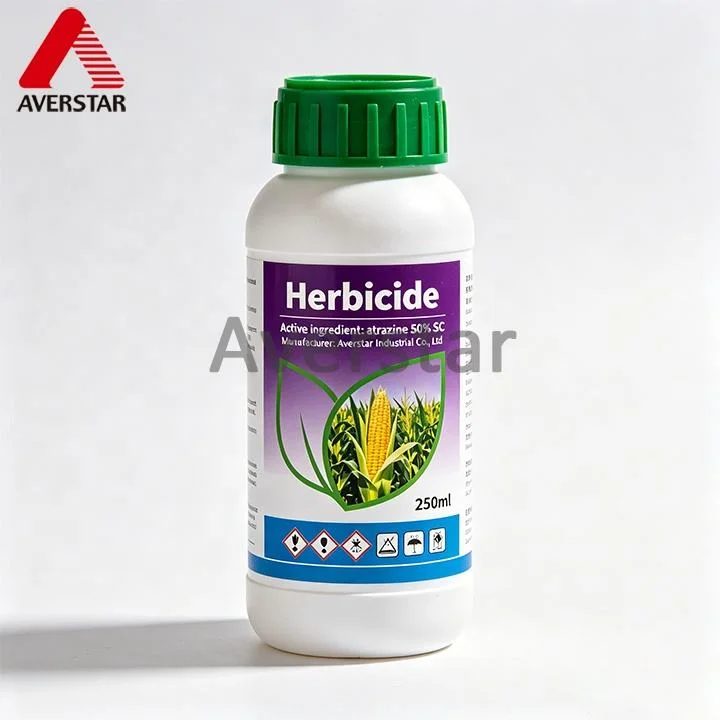
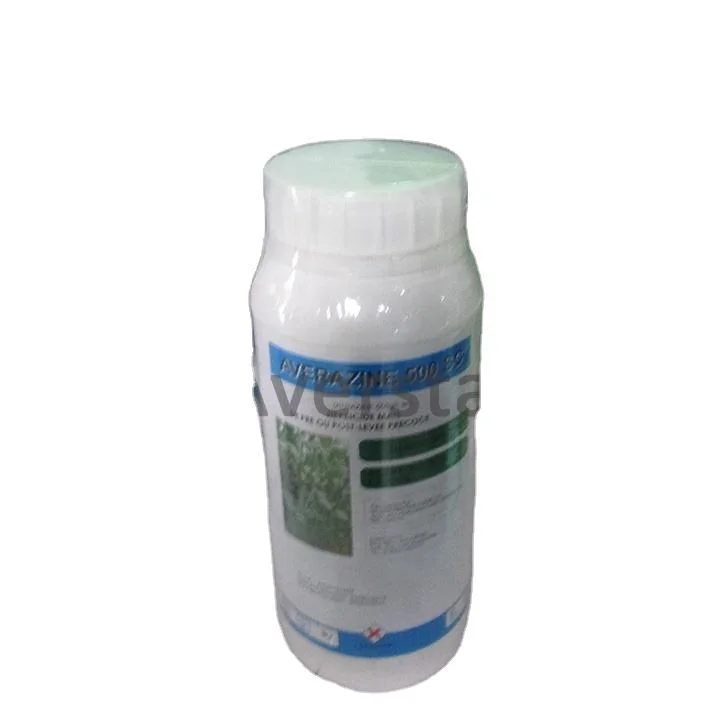
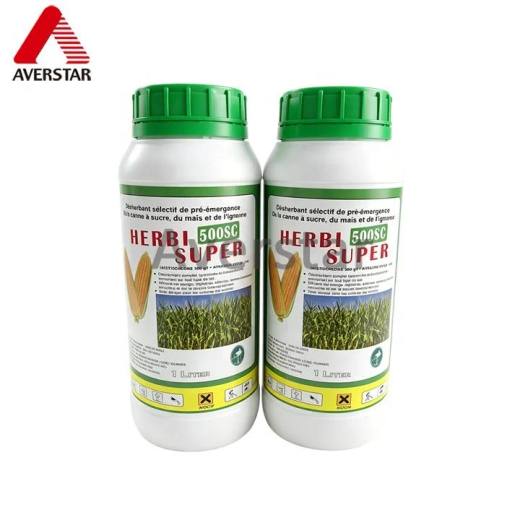
Atrazine 50% SC and Atrazine 38% SC are two commonly supplied formulations based on the same active ingredient, Atrazine. Both are suspension concentrate products designed to be diluted with water and applied with agricultural spraying equipment.
But what exactly does Atrazine do? Which weeds does it control? Why is it so closely associated with corn and maize? Is Atrazine a weed killer or an insecticide? What is the difference between 50% SC and 38% SC? And when is the best time to use it?
This article takes a practical look at Atrazine from the perspective of farmers, distributors, and agricultural buyers.
Atrazine Is a Herbicide, Not an Insecticide
The first thing worth making clear is that Atrazine is a herbicide.
It is designed to manage unwanted plants, not insects.
In crop protection, this distinction is important because farmers often face several problems in the same field. A maize crop may have weeds growing between the rows while aphids, caterpillars, corn borers, or other insects are also present. These are two different problems and normally require two different crop-protection strategies.
Atrazine is mainly used for weed management.
It should not be expected to kill aphids, thrips, whiteflies, caterpillars, corn borers, beetles, or other insect pests.
A simple way to remember it is:
Atrazine = weed control
Insecticide = insect control
If a farmer needs both weed and insect management, the appropriate products should be selected separately according to the crop and pest situation.
Why Is Atrazine Closely Associated with Corn and Maize?
Walk through a maize field during the early growing season and you will quickly see why weed control matters.
A young maize plant has to establish its root system and build enough leaf area to compete successfully. At the same time, weeds such as grasses and broadleaf weeds can emerge rapidly after rain.
A field may contain crabgrass, foxtail, barnyardgrass, pigweed, lambsquarters, purslane, or other local weed species.
These weeds do not need to look particularly large to become a problem. They are already competing with the crop for moisture and nutrients.
This is one of the reasons Atrazine for corn and Atrazine for maize remain important search terms among farmers and agricultural distributors in markets where Atrazine is registered.
The purpose of using Atrazine is not simply to make the field look clean. The larger objective is to reduce weed competition during important stages of crop establishment.
What Does Atrazine Actually Do to a Weed?
Atrazine belongs to a group of herbicides that interfere with photosynthesis in susceptible plants.
Photosynthesis is the process through which green plants use light energy to produce the energy required for growth.
When a susceptible weed is affected by Atrazine, its normal photosynthetic activity is disrupted. The plant can no longer develop normally, and symptoms may gradually appear.
Depending on the weed and growing conditions, farmers may eventually observe yellowing, reduced growth, chlorosis, tissue damage, and progressive decline.
This is also why herbicide results are not always visible immediately after spraying.
A farmer may look at a field the day after application and think, “Nothing happened.”
That does not necessarily mean the treatment failed.
The speed at which symptoms develop depends on the weed species, growth stage, environmental conditions, application method, and other factors.
Which Weeds Can Atrazine Control?
Atrazine is generally used against susceptible annual weeds, including certain grass and broadleaf species.
Among the grass weeds that may be susceptible are species of:
Foxtail
Crabgrass
Barnyardgrass
Goosegrass
Other annual grasses may also be relevant depending on the region.
Among broadleaf weeds, susceptible species may include:
Pigweed
Lambsquarters
Purslane
Smartweed
Ragweed
Cocklebur
The exact weed spectrum is always more complicated than a simple list.
A weed that is controlled well in one region may behave differently in another. Weed populations can develop resistance, and different species naturally have different levels of sensitivity.
For this reason, a good herbicide recommendation starts with one simple question:
What weeds are actually growing in the field?
Grass Weeds and Broadleaf Weeds: Why the Difference Matters
Farmers often describe a field as simply “full of weeds,” but from a crop-protection perspective, knowing the type of weed is important.
Grass weeds have narrow leaves and generally resemble the crop family of maize. Broadleaf weeds have a different plant structure and include many common species found in cultivated fields.
A maize field may contain both groups at the same time.
This is one reason herbicide programs are often designed around the actual weed spectrum rather than around the crop alone.
Atrazine can be useful in situations where susceptible grass and broadleaf weeds occur together, but it should not be assumed to control every weed species in the field.
Atrazine 50% SC: What Does the “SC” Mean?
The “SC” in Atrazine 50% SC stands for Suspension Concentrate.
Instead of being supplied as a dry powder, the active ingredient is formulated as a concentrated suspension that is diluted with water before spraying.
For farmers, this is a familiar and convenient type of formulation.
A good SC product should disperse properly in water and maintain suitable suspension characteristics when prepared and used according to the manufacturer's instructions.
From a practical point of view, SC formulations are popular because they can be handled using conventional agricultural spray systems and are available in packaging suitable for both smaller farms and commercial operations.
What Is the Difference Between Atrazine 50% SC and Atrazine 38% SC?
The simplest difference is the concentration of Atrazine.
Atrazine 50% SC contains a higher concentration of active ingredient than Atrazine 38% SC.
That sounds simple, but there is an important point for buyers.
A 1-liter container of 50% SC and a 1-liter container of 38% SC do not contain the same amount of active ingredient.
Therefore, comparing only the price per liter can give the wrong impression.
For an importer or distributor, a better comparison is based on:
active ingredient concentration + recommended application rate + treatment cost per hectare + formulation quality.
A lower price per bottle does not necessarily mean a lower cost of crop protection.
Similarly, a higher concentration does not automatically mean a better product.
The correct choice depends on the customer's registered product, application program, local requirements, and economics.
When Is Atrazine Usually Applied?
One of the most important questions in herbicide use is not simply “how much,” but “when?”
Atrazine may be used in pre-emergence or early post-emergence weed-management programs where the relevant product is registered.
Before the Weeds Become Established
In a pre-emergence program, the objective is to manage susceptible weeds before they become established.
This approach can be useful in fields with a history of predictable annual weed pressure.
For example, a farmer may know that every season the same field develops heavy grass and broadleaf weed pressure shortly after planting.
Instead of waiting until the weeds become large, an early weed-management program can be planned around the expected emergence pattern.
When Young Weeds Have Already Emerged
In early post-emergence situations, the weeds have already appeared, but they are still relatively young.
This is often an important window for weed management.
Large weeds that have been growing for a long time can be much more difficult to manage than small, actively growing weeds.
This is why experienced farmers spend time scouting fields rather than waiting until weeds become obvious from a distance.
Why Farmers Should Not Wait Until the Weeds Are Huge
Imagine two maize fields.
In the first field, the farmer identifies weeds while they are still small and treats them according to the registered recommendation.
In the second field, the farmer waits until the weeds are tall, dense, and already competing strongly with the maize.
Even if the same herbicide is eventually used, the two situations are not equivalent.
The second field has already suffered from weed competition.
This is an important principle of crop protection:
Good weed control is not only about killing weeds. It is also about preventing weeds from becoming a serious competitor to the crop.
Soil Moisture Can Make a Difference
Anyone who has worked in agriculture knows that weather can change the result of a field operation.
Atrazine performance can also be influenced by soil conditions.
For soil-applied programs, moisture can be particularly important.
Too little moisture may affect how a soil-applied herbicide behaves, while excessive rainfall can create other concerns such as runoff and movement.
Soil texture, organic matter, clay content, pH, and other characteristics can also influence herbicide behavior.
This is why agricultural recommendations should never be separated completely from the local farming environment.
A maize farm in a dry region and a maize farm in a high-rainfall tropical region may grow the same crop but face very different weed-management conditions.
What About Rain After Spraying?
Rainfall is another practical question that farmers often ask.
The answer depends on the application method, timing, amount of rainfall, and product instructions.
For soil-applied herbicide programs, moisture can be part of the process that makes the treatment effective.
On the other hand, excessive rainfall can increase runoff and environmental risks.
For foliar applications, rainfall shortly after spraying may influence the amount of product that remains on the plant.
Rather than relying on a universal “X hours before rain” rule, farmers should follow the specific product label and local recommendations.
Can Atrazine Be Used in Tropical Agriculture?
This question comes up frequently because many tropical farming areas experience strong weed growth.
Warm temperatures combined with seasonal rainfall can create excellent conditions not only for crops but also for weeds.
In some tropical and subtropical maize-producing regions, farmers may face repeated flushes of weeds after rainfall.
Possible agricultural scenarios include:
- Rain-fed maize
- Irrigated maize
- Commercial maize farms
- Smallholder maize production
- Mechanized agriculture
- Agricultural cooperatives
Atrazine can be part of a weed-management program where it is registered and appropriate.
However, tropical agriculture is not one single environment. Soil type, rainfall pattern, weed species, crop varieties, and regulations vary greatly between countries.
Atrazine and Herbicide Resistance
There is another topic that should not be ignored when discussing Atrazine: herbicide resistance.
A farmer may use the same herbicide successfully for many years and then suddenly notice that certain weeds are no longer being controlled as expected.
This can have several possible causes, including application problems, environmental conditions, incorrect identification, or resistance.
Repeated exposure to the same mode of action can place selection pressure on weed populations.
For long-term weed management, farmers can consider an integrated approach involving:
- Crop rotation
- Different herbicide modes of action
- Mechanical weed control
- Field scouting
- Preventing surviving weeds from producing seed
- Maintaining good application practices
- Monitoring changes in weed response
The answer to poor control should not simply be “use more.”
More product is not automatically better, and exceeding the approved rate can create crop, environmental, and regulatory problems.
Atrazine Is Only One Part of Weed Management
Modern crop production rarely depends on one product alone.
A good weed-management program can include several layers.
Before planting, farmers may consider crop rotation and field preparation.
After planting, they may monitor weed emergence.
During the crop's early development, herbicides may be used where appropriate.
Later in the season, mechanical or other management practices may be necessary.
The idea is to prevent weeds from producing seeds and becoming an even bigger problem in the following season.
In this sense, Atrazine is better understood as a tool within an overall weed-management program, rather than a complete solution to every weed problem.
What Atrazine Does Not Control
Clear communication is especially important when selling agricultural products internationally.
Atrazine should not be presented as a product for controlling insect pests.
It does not replace insecticides used for:
- Aphids
- Thrips
- Whiteflies
- Caterpillars
- Corn borers
- Beetles
- Leafhoppers
- Planthoppers
It is also not a fungicide for fungal diseases.
If a farmer has weeds, insects, and crop diseases at the same time, the crop-protection program needs to address each problem appropriately.
This is why the phrase “crop protection” is broader than “herbicide.”
How Is Atrazine SC Applied?
Atrazine SC is generally diluted with water and applied using suitable agricultural spraying equipment.
The actual application rate and timing should come from the approved product label.
In practical field operations, farmers should pay attention to several basic points.
First, make sure the spraying equipment is properly calibrated.
Second, make sure the product is mixed according to the manufacturer's instructions.
Third, maintain uniform spray coverage.
Fourth, avoid unnecessary overlap.
Finally, consider wind and weather conditions to reduce the risk of spray drift.
A high-quality herbicide cannot compensate for extremely poor application technique.
Common Spraying Equipment
Depending on farm size and local practices, suitable equipment may include:
- Knapsack sprayers
- Backpack sprayers
- Boom sprayers
- Tractor-mounted sprayers
- Other calibrated agricultural spray systems
Large commercial maize farms will generally require more efficient equipment than small farms.
For distributors, understanding the customer's application method can therefore be useful when discussing product requirements.
Why Formulation Quality Matters
Two products can contain the same active ingredient concentration on paper but perform differently if their formulation quality is not consistent.
For an SC herbicide, buyers may be interested in:
- Active ingredient content
- Suspension stability
- Dispersion
- Particle characteristics
- Storage stability
- Compatibility with water
- Batch consistency
This is why professional agrochemical buyers often request a Certificate of Analysis (COA) and product specification before purchasing.
The active ingredient percentage is important, but it is not the only quality indicator.
What Should an International Buyer Ask for?
When an importer is evaluating Atrazine 50% SC or Atrazine 38% SC, several documents are commonly requested.
These may include:
Product Specification
Technical Data Sheet (TDS)
Safety Data Sheet (SDS/MSDS)
Certificate of Analysis (COA)
Product Label
Packaging Specification
Shelf-Life Information
Storage Conditions
Other documents may be required depending on the destination country.
For regulated agricultural chemicals, registration and import requirements should be checked before commercial distribution.
Atrazine for OEM and Private Label
For agricultural distributors that want to develop their own brand, Atrazine products may also be considered for OEM and private-label supply where legally permitted.
Depending on the supplier and market requirements, possible options can include:
- Customized brand name
- Customized label
- Customized bottle
- Customized carton
- Different packaging sizes
- Neutral packaging
- Distributor-specific packaging
- Technical documentation
This can be particularly useful for importers who already have agricultural distribution channels but want to expand their herbicide portfolio.
However, private-label production should always be coordinated with the registration and labeling requirements of the destination market.
How Should You Compare Atrazine Suppliers?
For a commercial buyer, the cheapest quotation is not always the most competitive one.
A more useful evaluation can include:
What is the actual Atrazine concentration?
Is the formulation stable?
Can the supplier provide COA and TDS?
Is the product suitable for the intended market?
Can the supplier provide consistent batches?
What packaging options are available?
Can the supplier support OEM/private-label production?
What is the production lead time?
What is the cost per treated hectare?
These questions can give a much clearer picture of the real value of an Atrazine supplier.
Frequently Asked Questions About Atrazine
What is Atrazine used for?
Atrazine is a selective herbicide used to control or suppress susceptible weeds in approved agricultural crops, particularly maize and corn in markets where its use is registered.
Is Atrazine a weed killer?
Yes. Atrazine is an agricultural herbicide used for weed management.
Is Atrazine an insecticide?
No. Atrazine is a herbicide, not an insecticide.
Can Atrazine kill aphids?
No. Aphids are insect pests and require an appropriate registered insecticide.
Can Atrazine kill corn borers?
No. Atrazine is not designed to control corn borers.
What weeds does Atrazine control?
Atrazine can control or suppress certain susceptible annual grass and broadleaf weeds, depending on the product, crop, weed species, and application conditions.
Can Atrazine control crabgrass?
Crabgrass may be susceptible to Atrazine depending on species, growth stage, local conditions, and resistance status.
Can Atrazine control pigweed?
Certain susceptible pigweed species may be controlled or suppressed by Atrazine.
Can Atrazine be used on maize?
Atrazine is closely associated with maize and corn weed-management programs, but the product must be registered for the intended use in the relevant country.
What is Atrazine 50% SC?
Atrazine 50% SC is a suspension concentrate formulation containing 50% Atrazine.
What is Atrazine 38% SC?
Atrazine 38% SC is a suspension concentrate formulation containing 38% Atrazine.
Which is better, Atrazine 50% SC or 38% SC?
Neither concentration should automatically be considered “better.” The correct choice depends on the registered product, application rate, target weeds, cost per hectare, formulation quality, and local requirements.
Can Atrazine be used before weeds emerge?
Yes, pre-emergence use is an important Atrazine application strategy where permitted by the product label.
Can Atrazine be used after weeds emerge?
Some Atrazine products may be registered for early post-emergence use. The appropriate timing depends on the crop, formulation, weed stage, and local label.
Does Atrazine work on grass weeds?
Atrazine can control or suppress certain susceptible annual grass weeds.
Does Atrazine work on broadleaf weeds?
Atrazine can control or suppress certain susceptible broadleaf weeds.
Does Atrazine work in dry conditions?
Herbicide performance can be influenced by soil moisture and weather. Users should follow the specific product label and local agronomic recommendations.
Does rain affect Atrazine?
Yes, rainfall can influence herbicide performance and environmental movement. The effect depends on application method and timing.
Can Atrazine be used repeatedly?
Repeated use of the same mode of action can increase herbicide-resistance pressure. Integrated weed management is recommended.
A Practical Way to Think About Atrazine
If you are a farmer, think of Atrazine as one tool for managing weeds.
If you are a distributor, think of Atrazine as a herbicide product that needs to match a particular crop and weed-management program.
If you are an importer, look beyond the price per kilogram or liter and evaluate active ingredient concentration, formulation quality, documentation, registration, packaging, and cost per hectare.
If you are developing a private-label agricultural brand, consider not only the formulation but also local registration, label requirements, packaging, and long-term supply stability.
In every case, the fundamental question remains the same:
What weed problem are you trying to solve?
Once the weed, crop, growth stage, field conditions, and regulatory requirements are understood, it becomes much easier to determine whether Atrazine is an appropriate option.
Final Thoughts
Atrazine 50% SC and Atrazine 38% SC are not simply two bottles with different percentages on the label. They are formulations that need to be considered in the context of crop production, weed biology, field conditions, application timing, and local agricultural regulations.
For maize and corn production, Atrazine can play an important role in managing susceptible annual grass and broadleaf weeds where its use is approved.
Its value comes from helping farmers manage weed competition during important crop-growth periods.
At the same time, Atrazine should be used responsibly. It is a herbicide, not an insecticide, and it should not be expected to solve insect or disease problems.
The most effective agricultural programs combine good field scouting, accurate weed identification, appropriate application timing, correct spraying technique, resistance management, and other integrated weed-control practices.
For professional buyers, Atrazine 50% SC and Atrazine 38% SC can also be evaluated as commercial, OEM, or private-label herbicide products, provided the intended use complies with the regulations of the destination market.
Ultimately, good crop protection is not about using the strongest product possible.
It is about using the right product, on the right crop, against the right weed, at the right time, and under the right conditions.
Buyer decision guide
Product positioning and benefits
Professional Atrazine 50% / 38% SC sourcing option for agricultural supply partners requiring destination-specific formulation, packaging and document review.
- Two listed SC concentration options: 50% and 38%
- Commercial specifications can be checked against current batch documentation
- Packaging requirements can be assessed for formulation and destination compatibility
- Private-label and multilingual label requirements may be reviewed
Mode of action
Atrazine inhibits photosynthesis in susceptible weeds by blocking electron transport in Photosystem II, resulting in reduced growth, chlorosis, and eventual death of the affected weeds.
Practical product guide
Applications, formulation and supply
A procurement-focused overview of where this product is typically considered, how it is supplied, and which commercial details should be confirmed before ordering.
Applications / crops
Where buyers commonly evaluate this product.
- Maize / Corn
- Sugarcane
- Other crops where Atrazine is registered and approved for use
Target pests / diseases
Target scope for product selection; verify the local label.
- Crabgrass
- Foxtail
Product video
imdia 40 sc
Selective Atrazine herbicide for effective grass and broadleaf weed control in corn and other crops.
Technical data
Specifications
- Active ingredient
- Atrazine
- Concentration
- 50% / 38%
- Formulation
- SC
- CAS number
- 1912-24-9
- EINECS number
- 217-617-8