
Averstar Chemical Editorial Team Updated August 30, 2026
Glyphosate Formulations for Importers: SL, SG and WG Compared
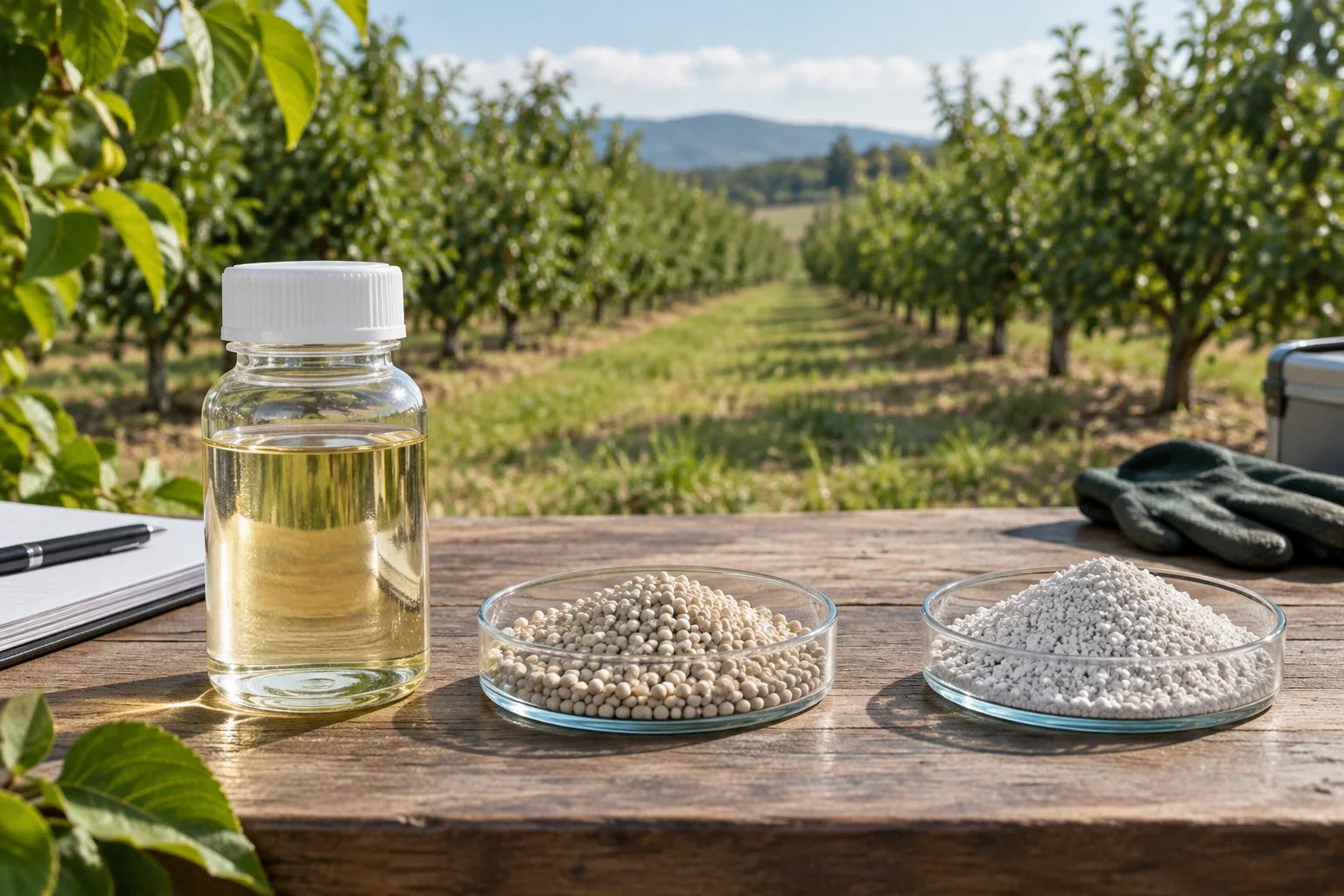
Glyphosate Formulations for Importers: SL, SG and WG Compared
This guide explains how professional buyers can compare glyphosate formulations — liquid SL concentrates, SG soluble granules and WG water dispersible granules — before shortlisting suppliers. It is an educational sourcing resource, not an application recommendation, product label or legal opinion. Product approval, label directions and commercial legality must always be verified for the destination jurisdiction.
Comparing SL, SG or WG offers for your destination market? Send the required specification, pack size and documents in a glyphosate product enquiry. Our export team can confirm available formulations, packaging and documentation without assuming that one market’s registered use applies in another.
Glyphosate is a non-selective, systemic herbicide classified by HRAC in Group 9 as an EPSP synthase inhibitor. Because it is one of the most widely traded herbicide active ingredients, quotations arrive in many commercial configurations, and two offers that look similar on a product name can differ materially in salt form, concentration basis, formulation type and documentation.
Salt form and acid equivalent: the first specification check
Glyphosate is commonly supplied as a salt — for example isopropylamine (IPA), potassium or ammonium — dissolved or granulated with formulation aids. The concentration printed on an offer may refer to the salt or to the glyphosate acid. The comparable number across offers is the acid equivalent (a.e.), which expresses how much glyphosate acid the product actually delivers.
Before comparing prices, ask each supplier to state the salt form and the acid-equivalent content on the certificate of analysis and the proposed label. Comparing one offer quoted on salt content against another quoted on acid equivalent is one of the most frequent and expensive sourcing errors in this category.
Liquid SL concentrates
Soluble concentrates (SL) are the most familiar commercial form. Averstar supplies SL configurations across a range of concentrations, including Glyphosate 41% SL, Glyphosate 480 g/L SL, Glyphosate 48% SL, Glyphosate 410 g/L SL and Glyphosate Acid 360 g/L SL, plus the IPA-salt-labelled Glyphosate IPA 41% SL.
SL products ship a significant proportion of water, so freight cost per unit of acid equivalent is higher than for dry formulations, and packaging is typically drums or intermediate bulk containers. The surfactant system is part of the registered formulation: some markets restrict specific surfactants, so ask the supplier to confirm that the surfactant package matches what is registered in the destination market rather than assuming interchangeability.
High-load dry formulations: SG and WG granules
Dry, high-load configurations concentrate more acid equivalent into each shipped kilogram. Averstar lists Glyphosate 75.7% SG, Glyphosate 888 g/kg WG, Glyphosate 720 g/kg WG and Glyphosate 75% WG for buyers evaluating granular supply.
Granules avoid liquid-packaging constraints, reduce freight and storage volume per unit of acid equivalent, and are often preferred where import duty, inland logistics or container availability dominate landed cost. In exchange, the buyer should review dissolution behaviour, packaging moisture protection and any repacking plans, because granule quality is sensitive to storage and handling conditions.
Mixtures and companion actives
Ready-mixed combinations such as Glyphosate + 2,4-D 30% / 2% SL pair glyphosate with a companion active from a different mode-of-action group. For a buyer, a mixture changes the compliance question: every active ingredient in the formulation must be acceptable in the destination market, and the mixture itself — not only its components — normally needs its own registration. Resistance-management positioning of mixtures should be discussed with local agronomic and regulatory advisers rather than inferred from marketing material.
Documents to request before shortlisting
An evidence-led comparison needs the same document set from every candidate supplier: the certificate of analysis stating salt form and acid equivalent, the proposed or registered label, the safety data sheet, the product specification, packaging details and the manufacturing-site identity. Ask for the version and date of each document, and keep them together so differences between a quotation, a label and a technical sheet can be resolved before commercial commitments are made.
For a structured walkthrough of specification review in this category, see our guide to weed-control product specifications and the general pesticide formulation comparison for buyers.
Registration and residue references
Registration status for any glyphosate product is market-specific and can change. Use the FAO pest and pesticide management resources for framework guidance and the Codex pesticide residues database for internationally referenced maximum residue limits, then confirm current national decisions with the destination authority. Nothing in this guide replaces the registered label or local regulatory advice.
Compare Averstar glyphosate products
Averstar supplies the glyphosate configurations linked above from audited manufacturing partners, with COA, SDS, label and registration documentation support. Browse the full herbicides category to compare concentrations and formulations, and use the quotation form on any product page to confirm current MOQ, packaging options, documents and delivery terms for your destination market.
Frequently asked questions
How do I compare a 41% SL offer with an 888 g/kg WG offer?
Convert both to acid equivalent using the certificate of analysis and label, then compare landed cost per unit of acid equivalent including freight and packaging. Salt-content percentages from different salt forms are not directly comparable.
Does this guide tell me which glyphosate formulation to use?
No. It is a pre-screening resource for sourcing conversations. Use directions, approved crops and rates are governed by the registered label in the destination market.
Which documents confirm the real glyphosate concentration?
The batch certificate of analysis and the registered label. Both should state the salt form and the acid-equivalent content; if they disagree with the quotation, resolve the difference before ordering.
Authoritative references
- Herbicide mode-of-action and resistance resources - Herbicide Resistance Action Committee (HRAC Global)
- Pest and Pesticide Management - Food and Agriculture Organization of the United Nations (FAO)
- Codex Pesticides Residues Database - Codex Alimentarius Commission (FAO/WHO)