
Averstar Chemical Editorial Team Updated November 7, 2026
Dimethomorph WG Fungicide: Downy Mildew Buyer Guide
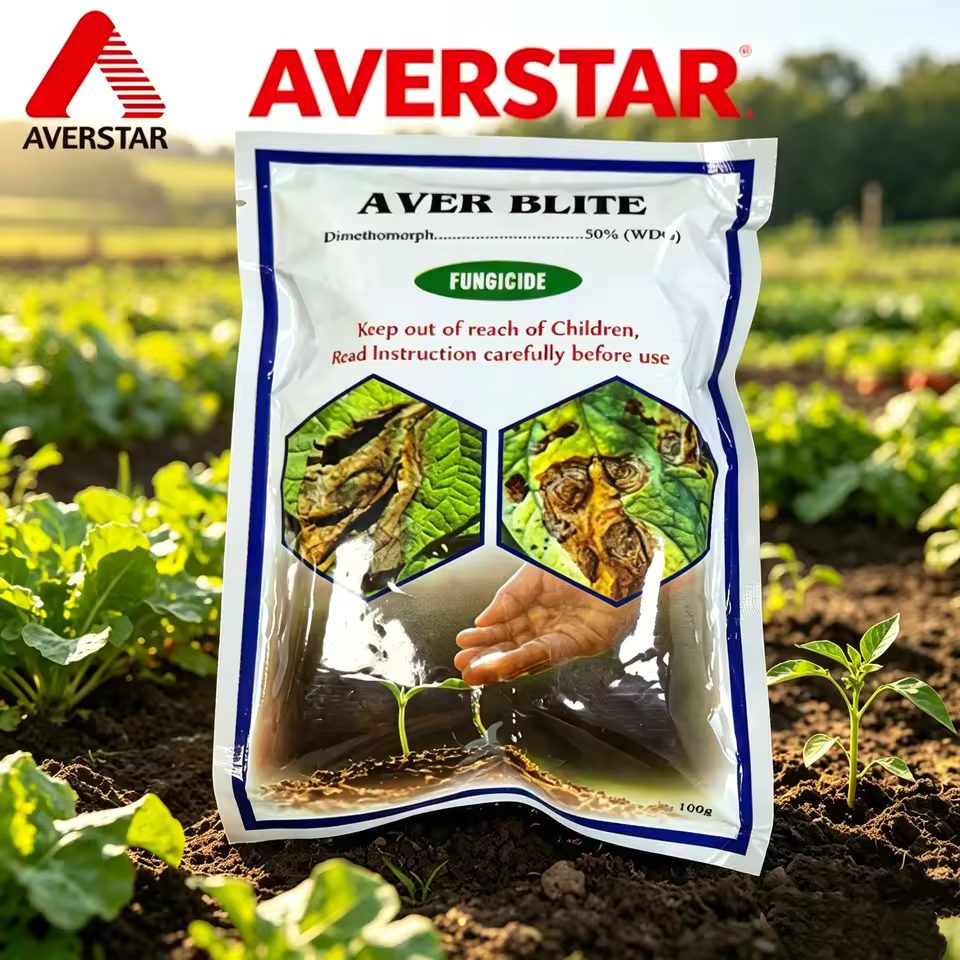
Dimethomorph is a fungicide for downy mildews, late blight and related diseases caused by oomycetes, the water-mould pathogens that behave differently from true fungi. For importers and distributors, the important selection questions are the target disease, the spray programme it has to fit into and the resistance-management rules for its fungicide group. Concentration and pack price come after that.
Averstar's catalogue lists dimethomorph 50% WG, 50% WDG and 80% WDG. This guide explains what dimethomorph does, how FRAC recommends using it, how to compare the three listings and which documents to request. The approved destination-market label always decides the permitted crops, diseases, dose, timing and restrictions for the product actually supplied.
Quick answer: Use dimethomorph for labelled oomycete diseases such as downy mildew and late blight, applied preventively and always with an effective partner from another fungicide group. Compare the granules on registration status, concentration and formulation quality; WG and WDG describe the same formulation type.
What dimethomorph does
The University of Hertfordshire Pesticide Properties Database (PPDB) entry for dimethomorph describes a systemic fungicide with good protective activity that inhibits cellulose synthesis, used against downy mildews, late blight and Phytophthora diseases in crops such as grapevines, potatoes, cucurbits, onions and lettuce. FRAC groups it with the carboxylic acid amide (CAA) fungicides, and FRAC's CAA working group explains that the CAA mode of action is linked to cellulose synthesis in oomycete pathogens.
That target range matters for buyers. Oomycetes are not true fungi, so dimethomorph is not a product for diseases such as powdery mildew or rusts. A product brief should name the disease and the pathogen, for example grape downy mildew or potato late blight, rather than asking for "a fungicide for mildew".
Follow the FRAC CAA recommendations
FRAC states that dimethomorph, mandipropamid, iprovalicarb, benthiavalicarb, valifenalate, flumorph and pyrimorph all show cross-resistance and share the same code. Resistance to the whole group has been found in grape downy mildew populations in some regions. FRAC's CAA recommendations therefore advise to:
- Apply CAA fungicides preferably in a preventive manner, before disease establishes.
- Use CAA fungicides for at most half of the intended applications in a crop cycle and no more than four CAA sprays, or three in areas of high resistance.
- Always apply them in mixture with an effective partner, such as a multi-site or another non-cross-resistant fungicide.
- Alternate with fungicides having other modes of action in the spray programme.
In practice, a straight dimethomorph product is used with a partner the local label allows. Multi-site fungicides are common partners; our mancozeb formulation guide covers one of them, and the fungicide mode of action guide explains how groups are combined. Switching between CAA products does not count as rotation, because they share cross-resistance.
Compare the catalogue formulations
- Dimethomorph 50% WG and 50% WDG: water-dispersible granules. "WDG" is a trade term for the same formulation type that the international code calls WG, the format the PPDB notes dimethomorph is often supplied in. When two listings show the same concentration, compare the granule specification, packaging and documents rather than the name.
- Dimethomorph 80% WDG: a higher-strength granule. It needs less formulated product per hectare, which lowers freight and packaging volume, but it does not control more diseases. It is a separate registered product, so its label rate cannot be derived from a 50% label by arithmetic.
Make sure the quotation, certificate of analysis and label all name the same concentration and the same formulation code used by the registration.
Check the formulation quality
For water-dispersible granules, ask for the certificate of analysis together with the formulation properties the buyer tests, typically dispersibility, suspensibility, wet sieve residue and dustiness, as described in FAO/WHO pesticide specifications. Granules must stay dry, so confirm that the inner bag and carton protect against humidity during sea freight. Penn State Extension's overview of pesticide formulations explains how dry flowables are handled in the field.
A product selection checklist
- The target disease and pathogen, confirmed as an oomycete disease on the destination-market label.
- The crop, crop stage and the number of sprays planned in the season.
- The partner fungicide from another group that the label allows in mixture.
- The CAA products already used, so the total stays within FRAC's limits.
- Concentration and formulation code matched on quotation, certificate and label.
- Formulation tests for WG: dispersibility, suspensibility, wet sieve and dustiness.
- Moisture-proof packaging, safety data sheet and translated label artwork.
Build the inquiry around the intended use
Send the crop, the target disease, the planned spray programme and partner product, the concentration, packaging and destination market through our contact form. For other oomycete products, see our metalaxyl selection guide. For a first order, a pesticide sample evaluation plan helps compare samples against the agreed specification before scaling up.
Frequently asked questions
Does dimethomorph control powdery mildew?
No. Dimethomorph targets oomycete diseases such as downy mildews, late blight and Phytophthora. Powdery mildews are true fungi and need products from other fungicide groups.
Can dimethomorph be used alone in every spray?
No. FRAC recommends always applying CAA fungicides in mixture with an effective partner, using them for no more than half of the planned sprays and no more than four per crop cycle. The destination-market label may set stricter limits.
Is dimethomorph WDG different from WG?
No. WDG is a trade name for water-dispersible granules, which the international formulation code calls WG. Compare the products on concentration, specification and documents, not on the abbreviation.
Authoritative references
- PPDB: Dimethomorph - University of Hertfordshire PPDB
- CAA Fungicides – FRAC Working Group - Fungicide Resistance Action Committee
- Pesticide Specifications and Quality Control (FAO/WHO JMPS) - FAO
- Pesticide Formulations - Penn State Extension