
Averstar Industrial Co., Ltd Editorial Team Updated September 20, 2026
Asian Citrus Psyllid and HLB: A Practical Sourcing Guide for Citrus Programs
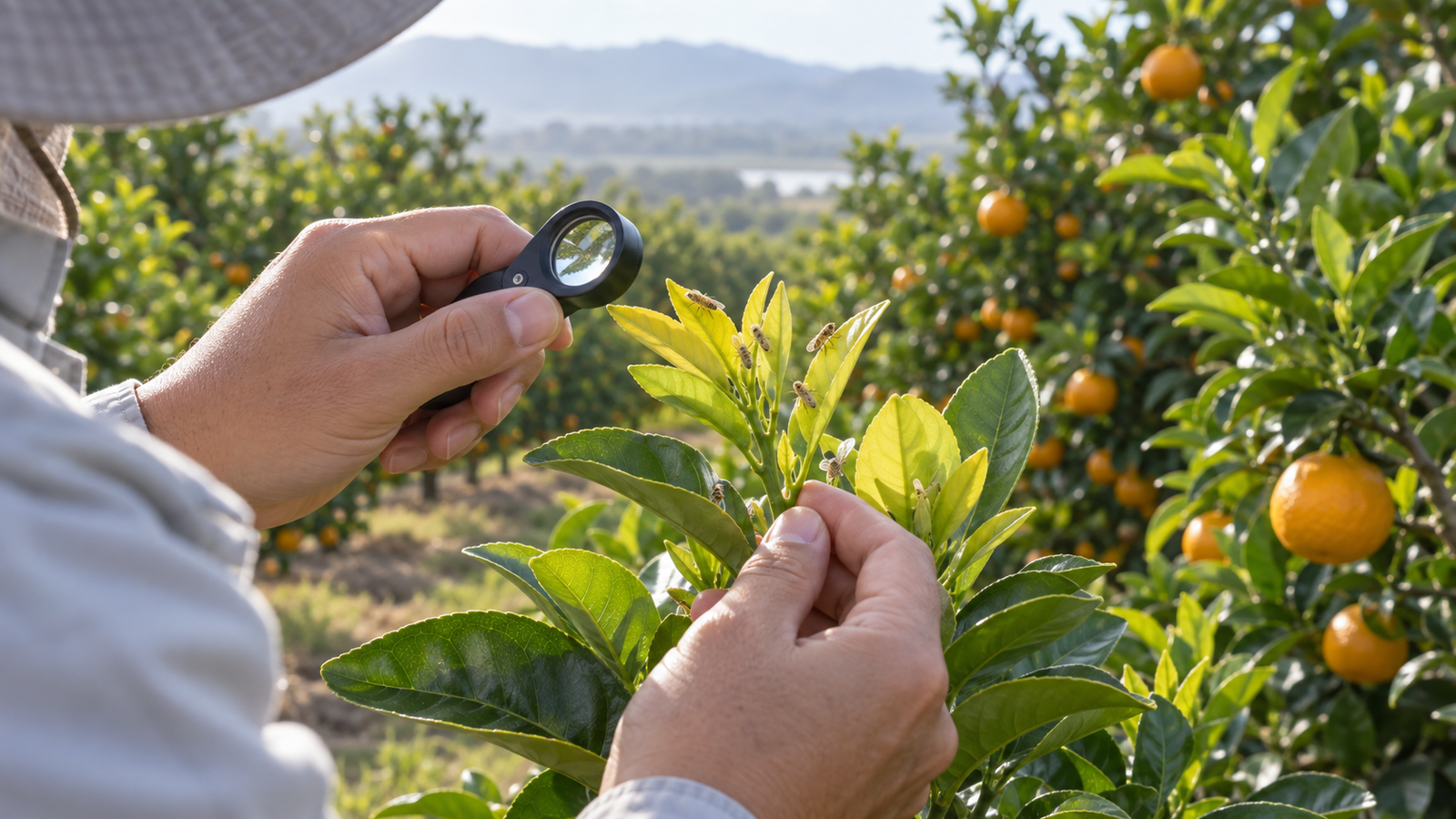
Asian citrus psyllid (Diaphorina citri) is important because it can transmit the bacterium associated with Huanglongbing, also called citrus greening. A citrus program therefore has two connected objectives: reduce vector movement and detect or manage infected trees under the rules of the production area. Infected trees cannot be “cured” by an insecticide, and a product choice made without a monitoring, plant-health and regulatory plan can create cost without solving the underlying risk.
This guide is for citrus importers, distributors and technical buyers building a product or crop-protection brief. It focuses on what to verify before sourcing insecticides, how to discuss flush timing and target life stages, and how to avoid resistance and registration mistakes.
Why the pest changes the sourcing brief
The psyllid is a small sap-feeding insect associated with tender new citrus flush. Eggs and nymphs are protected in unfolding leaves, while adults move between flushes and can spread the pathogen. USDA APHIS notes that citrus greening can remain symptomless for a period and that infected trees may later show blotchy mottling, dieback, premature fruit drop and poorly colored or misshapen fruit. A scouting program should therefore record new flush, psyllid life stage, tree symptoms, recent treatment history and the boundaries of any quarantine or regulated area.
The commercial implication is simple: “citrus insecticide” is too broad. A buyer should specify whether the program is intended for adults, nymphs or both; whether the use is foliar or soil-directed; whether the orchard is producing fruit for a market with residue restrictions; and whether the product is intended for a nursery, young trees or mature commercial blocks.
Build an integrated HLB-risk program
Vector control is only one part of a responsible program. Use clean and authorized planting material, follow local plant-health and quarantine rules, scout new flush regularly and remove or manage infected trees when required by the responsible authority. Coordinate nearby orchards where possible because adult psyllids move across property boundaries. Record the date and location of detections so that treatment decisions can be evaluated rather than repeated automatically.
Chemical control should be connected to monitoring thresholds and the crop calendar. A nursery or young orchard may have a different risk profile from a mature orchard with repeated flushes. Avoid calendar-only spraying when it is not supported by local advice. Use the registered label for target pest, crop, timing, rate, re-entry, pre-harvest interval and environmental precautions.
Compare products by life stage, mode of action and documents
When requesting offers, list the target life stage and the expected flush window. Ask the supplier to identify the active ingredient, formulation, concentration, pack size, shelf life and available documents. If a product is systemic, translaminar or contact-based, that characteristic should be described in the technical file and not inferred from the product name. The SDS, specification, COA and proposed label should all refer to the same formulation and concentration.
Resistance management is essential because IRAC records susceptibility and resistance information for Asian citrus psyllid across several mode-of-action groups. A buyer should ask which IRAC group applies to each active ingredient and plan rotation or mixtures only where the local label and technical adviser permit them. Repeated use of one mode of action, under-dosing, poor coverage or treating when adults are absent can reduce value and accelerate resistance selection.
Do not convert an active ingredient list into a universal rate recommendation. Commercial formulations may have different concentrations, adjuvants and legal uses. IRAC’s susceptibility method also distinguishes the active ingredient content of a formulation from the product name. Confirm the exact label in the destination market before discussing a rate or spray interval.
Documents and compliance checks for importers
A complete citrus program file should identify the destination country, orchard or nursery use, target pest stage, crop variety, production season, expected volume and required language. Request a current product specification, SDS, COA sample, label or label draft, packaging details, storage conditions and any available efficacy or registration support. Check whether the destination authority requires local trials, residue data, a permit, a phytosanitary document or additional stewardship statements.
FAO’s pesticide registration guidance makes clear that a national authority evaluates product identity, properties, toxicity, environmental risks, efficacy, residues, proposed uses, labels and waste management before authorization. A Codex or supplier reference may support research, but it does not by itself register a product. Keep the commercial offer, technical file and local registration decision clearly separated.
What to ask a supplier before purchase
Ask: Which psyllid life stage is the formulation designed to target? What is the IRAC mode-of-action group? What are the available concentrations and pack sizes? Is the product proposed for citrus fruit, nursery stock or another crop? Which destination-market labels are available? Can the supplier provide a matching SDS, COA and specification? What is the production lead time and remaining shelf life at shipment? Are there known restrictions for bloom, beneficial insects, water or worker exposure? These questions produce a more useful brief than a request for “the strongest citrus insecticide.”
Averstar sourcing support
Averstar can organize a destination-specific inquiry around the crop, pest stage, formulation, packaging and document set. We can help compare available options and prepare a clear request for quotation, while the buyer’s local agronomist and competent authority remain responsible for confirming the legal use, current label and stewardship requirements.
Browse Averstar insecticide products
Explore citrus crop-protection solutions
Send a citrus sourcing request
Practical decision sequence
1. Map the orchard or nursery and check quarantine requirements. 2. Confirm psyllid presence, life stage and new-flush timing. 3. Separate vector management from infected-tree and plant-health decisions. 4. Shortlist legally relevant active ingredients and IRAC groups. 5. Compare formulation, concentration, pack size, SDS, COA and label as one set. 6. Check residue, pollinator, worker-safety and environmental conditions for the destination. 7. Approve the shipment only after local technical and regulatory confirmation.
Frequently asked questions
These answers are a buyer-planning summary and are not a substitute for a registered local label.
Flush timing should be treated as a planning variable. New leaves attract egg-laying and nymph development, while adults may move between blocks as flush emerges. A buyer can therefore improve the inquiry by sharing the expected flush calendar, orchard age, planting density and whether the program covers one peak flush or repeated flushes. This information helps a supplier and local adviser discuss pack sizes and delivery windows without implying that one product fits every orchard.
Scouting and treatment records should be kept together. Record the block, date, number of shoots inspected, life stages observed, weather, treatment history and any signs of HLB-like symptoms. When the same mode of action is used repeatedly, note the reason and the technical approval. These records make it possible to investigate a poor result, distinguish reinvasion from resistance and avoid repeating a treatment simply because a calendar date has arrived.
Citrus buyers should also ask about non-target and environmental conditions. Depending on the destination label, restrictions may apply around bloom, bees, aquatic areas, workers, re-entry and harvest. A product that is technically available may still be unsuitable for the intended orchard window if its label, residue profile or stewardship requirements do not fit the market. Request the current SDS and label rather than relying on a translated sales sheet.
HLB programs often involve movement controls for nursery stock, branches, green waste or other regulated articles. USDA APHIS publishes quarantine and nursery-stock requirements for the United States, while other countries apply their own rules. Use the official plant-health authority for the destination. A supplier can organize documentation, but it cannot replace a permit, certificate or inspection decision issued by the competent authority.
A responsible commercial brief should finish with an evidence boundary. It may say which active ingredients, formulations and documents are available for discussion; it should not say that an unverified product cures HLB, is approved in every country or guarantees yield. This distinction protects the buyer, supports accurate SEO content and gives the sales team a clear path to request the missing local information.
How to prepare a citrus psyllid sourcing brief
A buyer workflow that connects scouting, resistance management and destination-market compliance.
- 1. Map the production area
Record orchard or nursery location, flush calendar and any quarantine or regulated-area requirements.
- 2. Confirm the pest stage
Record psyllid adults, nymphs or eggs, scouting method, date and affected blocks.
- 3. Define the legal use
Specify crop, plant age, intended use, destination and current label or registration status.
- 4. Compare the technical file
Request matching formulation, concentration, IRAC group, SDS, COA, label, packaging and shelf-life data.
- 5. Set stewardship controls
Document rotation, pollinator, worker, residue, water and environmental conditions with local technical advice.
Frequently asked questions
Can an insecticide cure a citrus tree infected with HLB?
No. Insecticide programs target the vector and may reduce spread risk, but an infected tree is not cured by an insecticide. Follow local plant-health guidance for diagnosis and tree management.
Should a buyer specify adults or nymphs?
Yes. Adults and nymphs occupy different locations and may respond differently to contact or systemic approaches. Include the life stage, flush timing and intended crop or nursery use in the sourcing brief.
Why is the IRAC group important?
IRAC groups help buyers and advisers plan rotations and avoid repeating one mode of action. The current label and local technical recommendation determine what can actually be used.
Does an international reference equal local registration?
No. A technical or international reference can support research, but the destination authority decides whether a product, crop use and label are authorized.
Authoritative references
- Citrus Greening and Asian Citrus Psyllid - USDA Animal and Plant Health Inspection Service (APHIS)
- Asian Citrus Psyllid resistance profile and methods - Insecticide Resistance Action Committee (IRAC)
- Integrated Pest Management - Food and Agriculture Organization of the United Nations (FAO)