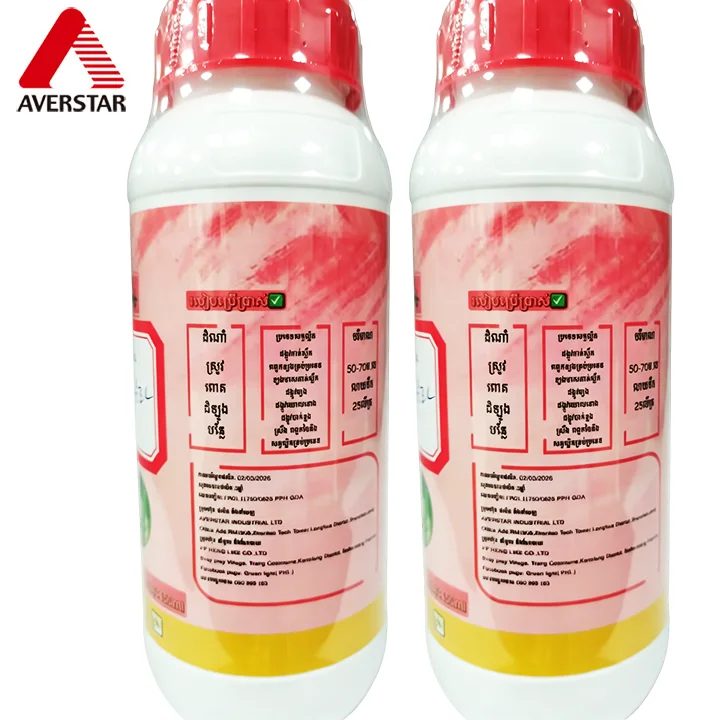
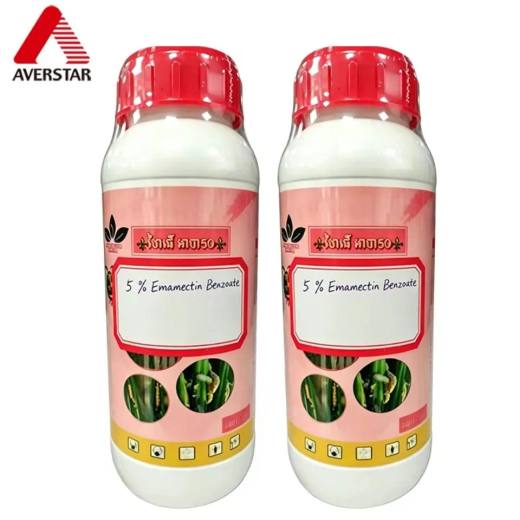
Product overview
Product information and use
Emamectin Benzoate 5% EC Insecticide: Uses, Target Pests, Crops and Application Guide
When crops begin to show holes in their leaves, damaged growing points, or fruits and pods with feeding marks, one of the first things farmers need to determine is whether the problem is caused by insects. Caterpillars can be particularly destructive because they often feed rapidly and can damage a crop in a short period of time.
Emamectin Benzoate 5% EC is an insecticide formulation developed for the control of susceptible lepidopteran insect pests. It is widely associated with caterpillar management in crops such as maize, cotton, vegetables, and other crops where its use is registered.
The product combines Emamectin Benzoate as the active ingredient with an EC (Emulsifiable Concentrate) formulation, allowing it to be diluted with water and applied using conventional agricultural spraying equipment.
What Is Emamectin Benzoate 5% EC?
Emamectin Benzoate is a semi-synthetic insecticide derived from the avermectin family. It is particularly well known for its activity against caterpillar pests and other susceptible larvae.
The 5% indicates the concentration of active ingredient in the formulation, while EC stands for Emulsifiable Concentrate.
After dilution with water, the formulation is designed for spray application to crops.
Emamectin Benzoate is mainly valued for its activity against lepidopteran larvae, making it an important option in crop protection programs where caterpillars are a major problem.
How Does Emamectin Benzoate Work?
Emamectin Benzoate acts primarily on the nervous system of susceptible insects.
It activates glutamate-gated chloride channels, disrupting normal nerve and muscle function. After exposure, susceptible larvae can rapidly stop feeding and gradually become immobilized before dying.
One practical advantage of this mode of action is the strong antifeedant effect observed in susceptible caterpillars.
This means that farmers may notice reduced feeding damage relatively soon after treatment, even though complete insect mortality may take longer.
In simple terms:
Emamectin Benzoate → affects insect nerve and muscle function → feeding stops → larvae become inactive → susceptible insects die.
What Pests Does Emamectin Benzoate Control?
Emamectin Benzoate is mainly used against susceptible caterpillar and larval pests.
Potential target pests include:
- Armyworms
- Fall armyworm
- Bollworms
- Fruit borers
- Pod borers
- Leaf-eating caterpillars
- Corn earworm
- Cabbage caterpillars
- Diamondback moth larvae
- Tomato fruitworm
- Other susceptible lepidopteran larvae
The actual pest spectrum depends on the crop, local pest population, product registration, application timing, and insect susceptibility.
Not every insect species will respond equally to Emamectin Benzoate.
Emamectin Benzoate for Caterpillar Control
Caterpillars are among the most important targets for Emamectin Benzoate.
They can damage crops by chewing leaves, attacking shoots, boring into stems, or feeding directly on fruits and pods.
Some species are particularly difficult to manage because they hide inside plant structures or feed during periods when field scouting is difficult.
For this reason, early identification is important.
When young larvae are detected, timely treatment can help reduce feeding damage before the population becomes difficult to manage.
Emamectin Benzoate for Fall Armyworm
Fall armyworm is an important pest of maize and other crops in many agricultural regions.
Young larvae can feed on leaves, while older larvae may cause severe damage to the growing point and surrounding plant tissue.
Because fall armyworm populations can develop rapidly under favorable conditions, farmers should regularly inspect maize fields.
Look for signs such as:
- Irregular holes in leaves
- Window-pane feeding
- Frass around the growing point
- Damaged whorl leaves
- Caterpillars hiding inside the maize whorl
Where Emamectin Benzoate is registered for fall armyworm control, timely application can form part of an integrated pest-management program.
Emamectin Benzoate for Maize and Corn
Maize is one of the important crops where caterpillar management can become necessary.
Common insect problems may include:
- Fall armyworm
- Corn earworm
- Other caterpillar pests
Emamectin Benzoate can be used in maize pest-management programs where the relevant use is registered.
The objective is to protect the crop from excessive leaf feeding and other larval damage during vulnerable growth stages.
Farmers should scout the crop regularly instead of applying insecticide automatically according to a fixed calendar.
Emamectin Benzoate for Cotton
Cotton can be affected by several bollworm and other caterpillar species.
These insects can attack:
- Leaves
- Squares
- Flowers
- Bolls
Damage to reproductive structures can be particularly important because it may directly affect cotton yield and fiber production.
Emamectin Benzoate can be incorporated into cotton insect-management programs where registered for the relevant target pests.
Good field monitoring is important because insect populations can vary considerably between locations and growing seasons.
Emamectin Benzoate for Vegetables
Vegetable crops can be highly sensitive to caterpillar damage because insects can reduce both yield and marketable appearance.
Potential vegetable applications may include crops such as:
- Cabbage
- Cauliflower
- Broccoli
- Tomato
- Pepper
- Eggplant
- Other vegetables where the product is registered
Caterpillars can chew holes in leaves or directly damage fruits and heads.
For fresh-market vegetables, preventing visible insect damage is especially important because even relatively small feeding injuries can reduce commercial value.
Emamectin Benzoate for Fruits
Certain fruit crops may also suffer from caterpillar or fruit-borer damage.
Depending on local registration, Emamectin Benzoate may be used against susceptible larval pests in selected fruit-production systems.
The exact crop and target pest combination must always be checked against the local product label.
Fruit growers should also pay particular attention to pre-harvest intervals and residue requirements.
Contact and Ingestion Activity
Emamectin Benzoate can act through both contact and ingestion, but ingestion by feeding larvae is particularly important.
After consuming treated plant material, susceptible caterpillars can rapidly reduce their feeding activity.
This makes application timing important.
The product should ideally be applied when target larvae are present and at an appropriate susceptible growth stage.
Large, mature larvae can sometimes be more difficult to control than younger larvae.
Why Application Timing Matters
A common mistake in insect control is waiting until the crop is already heavily damaged.
By that point, the farmer is not only trying to kill the insects but also dealing with damage that has already occurred.
Regular crop scouting can help identify pest populations earlier.
For caterpillar pests, the most useful time to intervene is often when young larvae are present and before they become large and difficult to manage.
Good timing can improve pest-control efficiency and reduce unnecessary pesticide use.
How Is Emamectin Benzoate 5% EC Applied?
Emamectin Benzoate 5% EC is generally diluted with water and applied using suitable agricultural spraying equipment.
Common equipment includes:
- Knapsack sprayers
- Backpack sprayers
- Boom sprayers
- Tractor-mounted sprayers
- Other calibrated agricultural spraying systems
The exact dosage, water volume, spray interval, and number of applications must follow the approved product label for the specific crop and target pest.
More insecticide does not automatically mean better control.
Correct calibration and good spray coverage are more important than simply increasing the concentration.
Spray Coverage Is Important
Caterpillars may hide inside:
- Maize whorls
- Dense foliage
- Leaf folds
- Plant canopies
- Fruit structures
Poor spray coverage can therefore reduce the amount of insecticide reaching the target.
Good application practice should consider:
- Spray volume
- Nozzle selection
- Pressure
- Plant canopy
- Crop growth stage
- Wind conditions
- Target pest location
For commercial agriculture, properly calibrated equipment can make a significant difference.
Emamectin Benzoate and Insect Resistance
Like other insecticides, Emamectin Benzoate should not be used repeatedly without considering resistance management.
Repeated use of the same mode of action can increase selection pressure on insect populations.
If resistant individuals survive and reproduce, control may gradually decline.
An effective resistance-management strategy may include:
- Rotating insecticide modes of action
- Avoiding unnecessary applications
- Monitoring pest populations
- Applying at the correct pest stage
- Using integrated pest management
- Following recommended application rates
Rotating products based on different modes of action is generally more useful than simply switching between different brands containing the same active ingredient.
Is Emamectin Benzoate an Organic Insecticide?
The term “organic” can be confusing.
Emamectin Benzoate is derived from compounds related to naturally occurring avermectins, but whether a particular product can be used in an organic farming system depends on the certification standard and regulatory requirements involved.
Therefore, it should not automatically be marketed as an “organic insecticide.”
Farmers should check the requirements of their specific organic certification system.
Emamectin Benzoate 5% EC vs Other Formulations
Emamectin Benzoate can be formulated in different ways, depending on the market and manufacturer.
Common formulation types may include:
- EC
- SG
- WDG
- WG
- Other registered formulations
The formulation affects handling, mixing, storage, application characteristics, and product positioning.
Emamectin Benzoate 5% EC is a liquid emulsifiable concentrate designed for dilution with water before spraying.
For commercial buyers, formulation selection can depend on:
- Customer preference
- Local agricultural practices
- Spray equipment
- Climate
- Packaging
- Registration requirements
- Product positioning
What Should Agricultural Buyers Check?
For importers and distributors, buying an insecticide is not simply about finding the lowest price.
Important factors include:
Active Ingredient
Confirm that the product contains the specified concentration of Emamectin Benzoate.
Formulation
Confirm that the product is supplied as EC and review the relevant physical and chemical specifications.
Product Quality
Request a current Certificate of Analysis (COA).
Technical Documentation
Professional buyers may require:
- TDS
- SDS/MSDS
- COA
- Product specification
- Label information
- Packaging specification
Registration
Check whether Emamectin Benzoate 5% EC is registered for the intended crop and target pest in the destination country.
Packaging
Common commercial packaging may include bottles, cans, or other formats depending on market requirements.
OEM Supply
Distributors may also require customized labels, packaging, branding, and carton designs.
Emamectin Benzoate 5% EC for OEM Supply
For agricultural distributors developing their own crop-protection brands, Emamectin Benzoate 5% EC may be available for OEM or private-label production where permitted.
Potential OEM services include:
- Custom brand name
- Custom label
- Custom bottle
- Custom carton
- Different packaging sizes
- Distributor-specific packaging
- Technical documents
- Export support
For international business, the product formulation and label must match the registration and regulatory requirements of the target market.
Storage and Handling
Like other agricultural pesticide products, Emamectin Benzoate 5% EC should be stored and handled according to its product label and SDS.
General precautions include keeping the product:
- In its original container
- Properly sealed
- Away from food and animal feed
- Away from unauthorized access
- In an appropriate pesticide storage area
- Under the manufacturer's recommended storage conditions
The specific safety instructions on the product label and SDS should always take priority.
Frequently Asked Questions
What is Emamectin Benzoate 5% EC used for?
It is an insecticide used primarily to control susceptible caterpillar and lepidopteran larvae on approved crops.
What pests does Emamectin Benzoate control?
It is mainly used against susceptible caterpillars such as armyworms, fall armyworm, bollworms, fruit borers, pod borers, and other lepidopteran larvae.
Is Emamectin Benzoate good for caterpillars?
Yes. Caterpillar control is one of the major agricultural uses of Emamectin Benzoate.
Can Emamectin Benzoate control fall armyworm?
It can be used for fall armyworm management where the product is registered for this pest and crop.
Can Emamectin Benzoate be used on maize?
Yes, it can be part of maize insect-management programs where registered.
Can Emamectin Benzoate be used on cotton?
It may be used against susceptible cotton caterpillar and bollworm pests where registered.
Can Emamectin Benzoate be used on vegetables?
Certain Emamectin Benzoate formulations are registered for vegetable crops and caterpillar control, depending on the country and product label.
What does EC mean?
EC means Emulsifiable Concentrate, a liquid formulation designed to form an emulsion when diluted with water.
Does Emamectin Benzoate kill insects immediately?
It can cause rapid feeding cessation in susceptible larvae, while complete mortality may take longer.
Is Emamectin Benzoate a contact insecticide?
It has both contact and ingestion activity, with ingestion by feeding larvae being particularly important.
Can Emamectin Benzoate control aphids?
Emamectin Benzoate is primarily used against susceptible caterpillar and lepidopteran pests and should not be assumed to provide reliable control of aphids.
Can Emamectin Benzoate control whiteflies?
It is not primarily a whitefly insecticide. The appropriate registered product should be selected based on the target pest.
How should Emamectin Benzoate resistance be managed?
Avoid repeated use of the same mode of action, rotate appropriate insecticides, monitor pest populations, and follow integrated pest-management practices.
Conclusion
Emamectin Benzoate 5% EC is a caterpillar-focused agricultural insecticide formulation designed for the control of susceptible lepidopteran larvae in crops where its use is registered.
Its activity against caterpillars makes it particularly relevant to crops such as maize, cotton, vegetables, and other agricultural crops affected by armyworms, bollworms, fruit borers, and similar pests.
The best results do not come simply from applying more insecticide. Successful pest management depends on identifying the correct pest, treating it at an appropriate growth stage, achieving good spray coverage, following the registered application rate, and incorporating resistance-management practices.
For farmers, the key question is simple: What insect is damaging the crop, and what stage is it in?
For agricultural distributors and importers, product quality, formulation stability, technical documentation, regulatory compliance, packaging, and reliable supply are equally important.
When used as part of a well-planned crop-protection program, Emamectin Benzoate 5% EC can be an effective tool for managing susceptible caterpillar pests and protecting crop yield and quality.
Buyer decision guide
Product positioning and benefits
A professional Emamectin Benzoate 5% EC insecticide sourcing option for B2B buyers assessing specification, packaging and export-document requirements. Uses and label claims must be confirmed for each destination market.
- Clearly identified active ingredient, concentration and formulation
- Commercial specification checked against current batch documentation during quotation
- Destination-specific packaging and document requirements can be reviewed
- Suitable for professional B2B sourcing and private-label enquiries
Mode of action
Emamectin Benzoate acts on the insect nervous system by activating glutamate-gated chloride channels, causing rapid feeding cessation, paralysis, and eventual death of susceptible larvae.
Practical product guide
Applications, formulation and supply
A procurement-focused overview of where this product is typically considered, how it is supplied, and which commercial details should be confirmed before ordering.
Applications / crops
Where buyers commonly evaluate this product.
- Maize / Corn
- Cotton
- Tomato
- Cabbage
- Cauliflower
- Broccoli
Product video
imdia 40 sc
Emamectin Benzoate 5% EC for effective caterpillar control.
Technical data
Specifications
- Active ingredient
- Emamectin Benzoate
- Concentration
- 5%
- Formulation
- EC
- CAS number
- 155569-91-8
- EINECS number
- 605-015-1
- Registration reference
- PD20150882